
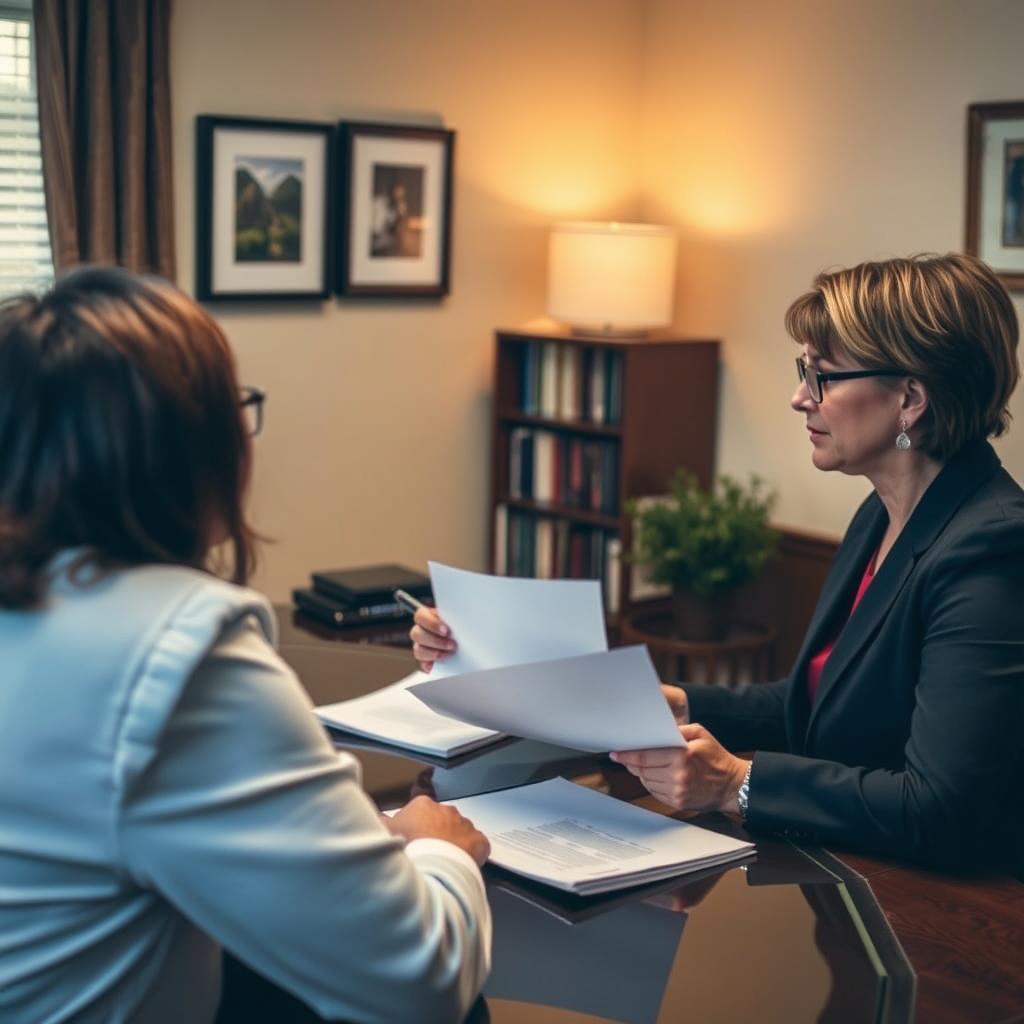
Separation Agreement Lawyer Woodstock, VA
When a marriage reaches a turning point and the path forward requires clarity about property, support, and parenting, a separation agreement brings structure to the transition. At the Shenandoah County General District Court, located at 112 S Main St in Woodstock, matters involving separation agreements are part of the broader family law docket that also flows through the Woodstock Juvenile & Domestic Relations District Court and the Shenandoah County Circuit Court. These courts handle the full range of domestic relations issues—from custody and support to equitable distribution and divorce—and a separation agreement often forms the foundation for how those issues are resolved. In Woodstock, the communities of Edinburg, Strasburg, Mount Jackson, Toms Brook, and New Market look to the Twenty-Sixth Judicial District for guidance when formalizing terms of separation. Mr. Sris and his Of Counsel bring over 120 years of combined legal experience to separation agreement matters in Woodstock and throughout the Shenandoah Valley. Results may vary. For a consultation about a separation agreement in Woodstock, Virginia, reach Law Offices Of SRIS, P.C. at (888) 437-7747. Law Offices Of SRIS, P.C. – Advocacy Without Borders.
The Shenandoah County Court System and Separation Agreement Cases
Woodstock is the county seat of Shenandoah County, and the courthouse at 112 S Main St houses the General District Court where many family law proceedings begin. Separation agreements are not filed as standalone civil actions, but they become operative when a divorce is filed, a custody modification is sought, or enforcement of terms becomes necessary. In Shenandoah County, divorce complaints and related equitable distribution claims are filed in the Shenandoah County Circuit Court, while custody, visitation, and support matters that may call upon a separation agreement are heard in the Woodstock Juvenile & Domestic Relations District Court. The General District Court handles preliminary protective orders and certain support establishment proceedings that may reference or rely on existing separation agreements.
Practitioners appearing in Shenandoah County courts for separation agreement matters encounter a bench that understands the agricultural and small-town character of the region. The court applies the same Virginia statutes that govern separation agreements statewide—particularly Va. Code § 20‑109, which addresses the enforceability of property settlement agreements—but local practice brings its own expectations about candor, preparedness, and reasonable negotiation before court intervention. Because the court’s docket is filled with matters affecting families from Woodstock to Toms Brook, judges appreciate when parties have already worked out the terms of their separation through a written agreement, reducing the issues that require judicial resolution.
How Separation Agreement Matters Proceed in Woodstock
For many couples in the Woodstock area, a separation agreement is drafted and signed outside of court, often with the assistance of experienced counsel for each party. The agreement sets out how marital property will be divided, whether spousal support will be paid, and, if children are involved, how custody, visitation, and child support will be handled. This document becomes the framework that a judge will incorporate into a final divorce decree when one is sought.
When the parties agree on all terms, the separation agreement can be presented to the circuit court as part of an uncontested divorce. If there is no agreement, the court must decide issues of equitable distribution, support, and custody under the statutory factors of Va. Code Title 20. In Shenandoah County, a well‑drafted separation agreement frequently shortens the litigation timeline because it eliminates disputes that would otherwise require evidentiary hearings and multiple court appearances. Even when a divorce proceeds on fault grounds, a comprehensive separation agreement can still resolve the financial and parenting aspects of the case, allowing the parties to focus the contested portion on the grounds for divorce. Throughout the process, the Shenandoah County courts expect compliance with procedural rules, timely filing, and professional conduct from all counsel.
What the Shenandoah County Court Considers in Separation Agreements
Virginia is an equitable distribution state, meaning the court divides marital property fairly—not necessarily equally—based on the factors in Va. Code § 20‑107.3. A separation agreement that addresses property classification, valuation, and distribution can preempt judicial division, but the court retains the authority to review the agreement for fairness and compliance with public policy. In Shenandoah County, the judge will examine whether the agreement was entered into voluntarily, without coercion, and with full financial disclosure.
When child custody or support terms are included, the court’s primary standard is the best interest of the child, guided by the ten statutory factors of Va. Code § 20‑124.3. Spousal support provisions are evaluated against the thirteen factors of Va. Code § 20‑107.1. A separation agreement that thoughtfully addresses these factors is more likely to be approved without modification. The court will also confirm that the agreement does not attempt to waive child support obligations below the Virginia guidelines or cut off a parent’s right to seek future modification of custody, as such provisions are unenforceable. Local attorneys who regularly appear before the Shenandoah County bench know the nuances that influence whether an agreement will be accepted as written.
Separation Agreement Representation by Mr. Sris and His Of Counsel
Mr. Sris, Owner and Founder of Law Offices Of SRIS, P.C., has practiced family law since founding the firm in 1997. Admitted in Virginia, Maryland, the District of Columbia, New Jersey, and New York, Mr. Sris brings a multi‑state perspective to separation agreement matters while concentrating on the local procedures of Shenandoah County. Mr. Sris testified before the Virginia House Courts of Justice Committee in support of 2019 HB 635 (chief patron Del. David Bulova), a bill that addressed equitable distribution procedures—a subject directly relevant to the property terms often contained in separation agreements.
Mr. Sris is supported by a team of Of Counsel attorneys who bring additional depth in family law and litigation. Together, Mr. Sris and his Of Counsel have over 120 years of combined legal experience. Results may vary. Mr. Sris and his Of Counsel have documented 4,739+ case results across all practice areas since 1997. The firm serves clients from its Shenandoah/Woodstock location at 505 N Main St, Suite 103, Woodstock, VA 22664, by appointment. For a consultation, call (888) 437‑7747.
Frequently Asked Questions About Separation Agreements in Woodstock, VA
What is a separation agreement in Virginia?
A separation agreement is a written contract between spouses that resolves issues such as property division, spousal support, and, when applicable, child custody, visitation, and child support. In Virginia, these agreements are enforceable under Va. Code § 20‑109 and can be incorporated into a final divorce decree. The agreement allows parties to avoid litigation over the terms of their separation and provides a clear roadmap for the financial and parenting aspects of their lives moving forward. In Shenandoah County, a comprehensive separation agreement is often the key to an uncontested divorce.
Do I need a lawyer for a separation agreement in Woodstock?
Virginia law does not require you to hire a lawyer to enter into a separation agreement, but having experienced legal representation helps ensure the agreement protects your rights and complies with statutory requirements. An attorney can advise you on what must be disclosed, identify issues that may not be obvious—such as retirement account division or tax consequences—and draft clear, enforceable provisions. In Woodstock, where the court will scrutinize agreements for fairness and completeness, the guidance of a family law attorney familiar with Shenandoah County practice is a significant advantage.
What should be included in a Virginia separation agreement?
A thorough Virginia separation agreement should address the classification and distribution of marital property, spousal support, and, if children are involved, custody, visitation, and child support. It should also cover the disposition of the marital home, division of debts, health insurance, tax considerations, and a process for resolving future disputes. In Shenandoah County, the court will expect the agreement to be signed by both parties, notarized, and accompanied by full financial disclosure. The more complete the agreement, the less likely the court will need to intervene later.
Can a separation agreement be enforced in Shenandoah County?
Yes, a separation agreement that is properly executed, voluntary, and not unconscionable can be enforced by the Shenandoah County Circuit Court or Juvenile and Domestic Relations District Court. If one party fails to comply with the terms, the other may file a motion to enforce. The court will interpret the agreement as a contract and can order specific performance or award damages. Because enforcement proceedings can be fact-intensive, having an agreement that is clearly written and free of ambiguity reduces the risk of protracted litigation.
How does a separation agreement affect divorce in Virginia?
A separation agreement can serve as the basis for a no‑fault divorce after the required separation period, eliminating the need for a contested trial on property, support, and custody. Under Va. Code § 20‑91(9)(b), a divorce may be granted after six months of separation if the parties have a signed separation agreement and no minor children. With minor children, the separation period is one year, but the agreement still resolves the collateral issues. In Shenandoah County, presenting a signed separation agreement at the final hearing can streamline the divorce process significantly.
Is a separation agreement required for a divorce in Virginia?
A separation agreement is not required to obtain a divorce in Virginia, but it is strongly recommended when the parties wish to settle their affairs privately and avoid a contested trial. Without an agreement, the court will decide all contested issues after a hearing. For many Woodstock‑area residents, a negotiated separation agreement brings predictability and reduces the emotional and financial cost of divorce. If the parties cannot agree, the matter proceeds as a contested divorce, and the court applies the statutory factors to resolve property, support, and custody.
For help with a separation agreement in Woodstock, Shenandoah County, or the surrounding Virginia communities, contact Law Offices Of SRIS, P.C. at (888) 437‑7747.
Related Family Law Pages
Family Law Lawyer Fairfax County ·
Family Law Lawyer Prince William County ·
Family Law Lawyer Loudoun County ·
Family Law Lawyer Manassas
Virginia Legal Resources
Virginia Code Title 20 (Domestic Relations) ·
Virginia Courts ·
Shenandoah County Circuit Court
Attorney advertising. Prior results do not guarantee a similar outcome.
Results may vary.
Case results depend on a variety of factors unique to each case.