
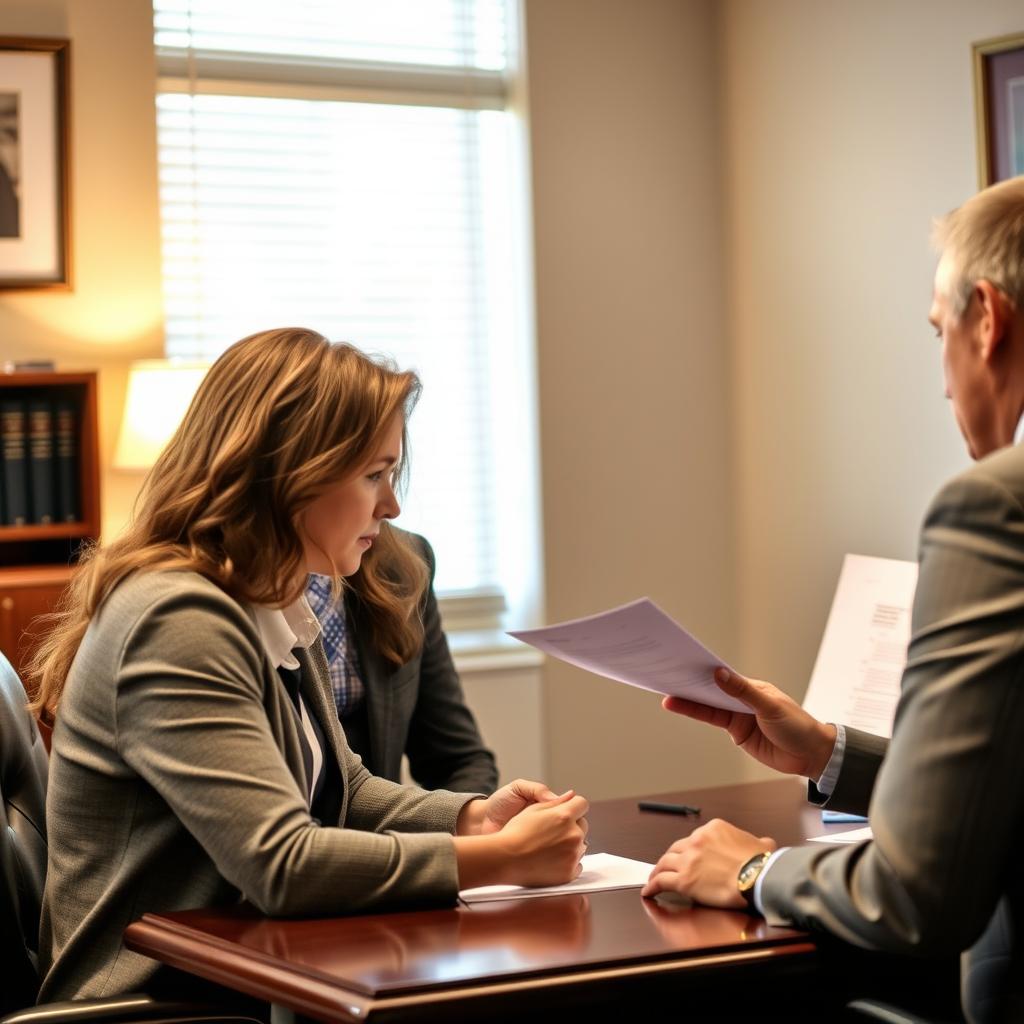
Rehabilitative Alimony Lawyer Shenandoah County, VA
If you are facing a divorce or separation in Shenandoah County and the question of ongoing financial support has arisen, understanding rehabilitative alimony is essential. This form of spousal support is designed to help a spouse who put their own earning capacity aside during the marriage gain the education, training, or work experience needed to become self‑sufficient. Mr. Sris and the firm’s Of Counsel attorneys concentrate their Virginia family law practice in Shenandoah County, guiding clients through both the legal framework and the practical realities of seeking or opposing rehabilitative alimony. We work with clients from Woodstock, Edinburg, Strasburg, Mount Jackson, Toms Brook, New Market, and the surrounding I‑81 corridor communities. For a consultation about your situation, reach Law Offices Of SRIS, P.C. at (888) 437‑7747. Law Offices Of SRIS, P.C. – Advocacy Without Borders.
What Rehabilitative Alimony Means in Shenandoah County
Rehabilitative alimony is a type of spousal support authorized under Virginia Code § 20‑107.1. Unlike permanent support, it is time‑limited and purpose‑specific: the court sets an award designed to allow the recipient spouse to obtain the skills or education necessary to re‑enter the workforce at a level that will permit financial independence. The Shenandoah County Circuit Court — located at 112 S Main St, Woodstock, VA — has exclusive jurisdiction over divorce and equitable distribution matters, and it is the court that will decide any contested spousal support issue, including rehabilitative alimony. Stand‑alone custody, visitation, and child support matters are heard in the Shenandoah County Juvenile and Domestic Relations District Court, but the divorce and all financial issues linked to it go before the Circuit Court.
Virginia is an equitable distribution state, meaning a judge divides marital property fairly but not necessarily equally. Spousal support is a separate determination, and a rehabilitative award is only one of several possible outcomes. The court weighs the statutory factors in § 20‑107.1, such as the standard of living established during the marriage, the duration of the marriage, the age and physical condition of each spouse, the contributions — both monetary and non‑monetary — of each party to the family’s well‑being, and, critically, the time and expense necessary for the recipient spouse to acquire the education or training that will lead to self‑sufficiency. A spouse who has been out of the workforce for many years often needs time and resources to update skills, and a well‑crafted rehabilitative plan can provide the bridge between the end of the marriage and economic independence. Because the Circuit Court in Shenandoah County sees cases from a variety of rural and small‑town communities, judges are accustomed to evaluating the local employment market and the realistic time frame needed for a spouse to become employable at a sustainable wage.
How Mr. Sris and His Of Counsel Handle Rehabilitative Alimony Cases
Mr. Sris and the firm’s Of Counsel attorneys work to build a clear, evidence‑based picture of each spouse’s financial reality. For the spouse seeking support, that means documenting the education or training that is needed, the anticipated cost, and the timeline for completion. For the spouse opposing an award, it means scrutinizing whether the claimed need is genuine, whether the recipient already has marketable skills, and whether the proposed plan is reasonable. We often collaborate with vocational attorneys, accountants, and other professionals to develop a supportable vocational plan or, conversely, to challenge a plan that appears inflated.
The process typically begins with a thorough review of the couple’s financial records, tax returns, and employment histories. If the parties can reach an agreement on rehabilitative support — either directly or through mediation — the terms can be incorporated into a signed separation agreement and submitted to the Circuit Court for approval. When agreement is not possible, the matter proceeds to a contested hearing in Shenandoah County Circuit Court, where the judge will determine whether rehabilitative alimony is appropriate and, if so, its amount and duration. Throughout the case, we focus on presenting a well‑organized, fact‑based argument that addresses each statutory factor under Va. Code § 20‑107.1, always with an eye toward the client’s long‑term financial stability.
About Mr. Sris and the Firm’s Of Counsel Attorneys
Mr. Sris, Owner and Founder of Law Offices Of SRIS, P.C., has practiced law since 1997. A former prosecutor, he brings a disciplined, analytical approach to every family law matter. Mr. Sris and the firm’s Of Counsel attorneys bring extensive combined legal experience to rehabilitative alimony cases, evaluating the economic realities of each situation and crafting arguments that stand up in the Shenandoah County Circuit Court. Results may vary.
The firm’s Of Counsel attorneys — experienced litigators admitted in Virginia courts — work alongside Mr. Sris to handle the full range of family law issues that often intersect with spousal support, including equitable distribution, child custody, and child support. India is not a signatory to the 1980 Hague Convention on Civil Aspects of International Child Abduction.
Frequently Asked Questions
What exactly is rehabilitative alimony in Virginia?
Rehabilitative alimony is a time‑limited spousal support award intended to give the recipient spouse the financial ability to obtain the education or training necessary to become self‑supporting. It is ordered under Va. Code § 20‑107.1 when the court finds that a spouse has sacrificed earning capacity during the marriage and needs transitional assistance. Unlike permanent support, rehabilitative alimony is tied to a specific vocational plan and ends when the plan’s goals are achieved or the court‑ordered period expires.
How does a Shenandoah County judge decide whether to award rehabilitative alimony?
The judge examines the factors listed in Va. Code § 20‑107.1, including the length of the marriage, each spouse’s age and health, their respective incomes and earning capacities, and the time and money needed for the requesting spouse to acquire new skills. The requesting spouse must present a concrete, realistic plan — such as enrolling in a degree program or completing a professional certification — and show that the plan is likely to lead to meaningful employment. The Shenandoah County Circuit Court will weigh all evidence, including testimony from vocational attorneys, before making a decision.
Can a rehabilitative alimony award be modified after it is ordered?
Yes, a rehabilitative alimony award can be modified if there has been a material change in circumstances, such as an unexpected job loss, a change in the cost of the educational program, or the recipient’s failure to make reasonable progress toward self‑sufficiency. Either spouse may petition the Shenandoah County Circuit Court for a modification under the same statutory framework that governed the original award. Because modification litigation is complex, it is wise to seek legal guidance before filing a petition.
Do I need a lawyer for a rehabilitative alimony case in Shenandoah County?
You are not required to have a lawyer, but rehabilitative alimony disputes are fact‑intensive and often involve vocational evidence, expert testimony, and detailed financial analysis. A misstep — such as failing to present a credible rehabilitative plan or overlooking a key financial document — can significantly affect the outcome. Mr. Sris and the firm’s Of Counsel attorneys understand how to build a record that addresses each of the § 20‑107.1 factors and can guide you through the process in the Shenandoah County Circuit Court.
What happens if the recipient spouse completes the training but still cannot find a job?
If the recipient completes the agreed‑upon training but, despite good‑faith efforts, remains unable to obtain suitable employment, the court may consider extending the support or modifying the plan. The recipient would need to demonstrate that the job market has changed materially or that unforeseen barriers exist. The court will examine whether the original plan was reasonably designed and whether the recipient made diligent efforts to find work. Each case turns on its own facts, and the judge retains broad discretion under Va. Code § 20‑107.1.
Reach Law Offices Of SRIS, P.C. at (888) 437‑7747 to schedule a consultation about rehabilitative alimony in Shenandoah County.
Explore our family law services in nearby Virginia counties:
Family Law Lawyer Clarke County •
Family Law Lawyer Frederick County •
Family Law Lawyer Warren County •
Family Law Lawyer Rockingham County •
Family Law Lawyer Augusta County
Additional information from official sources:
Virginia Code Title 20 (Domestic Relations) •
Virginia’s Judicial System
Attorney advertising. Prior results do not guarantee a similar outcome.
Results may vary. Case results depend on a variety of factors unique to each case.