
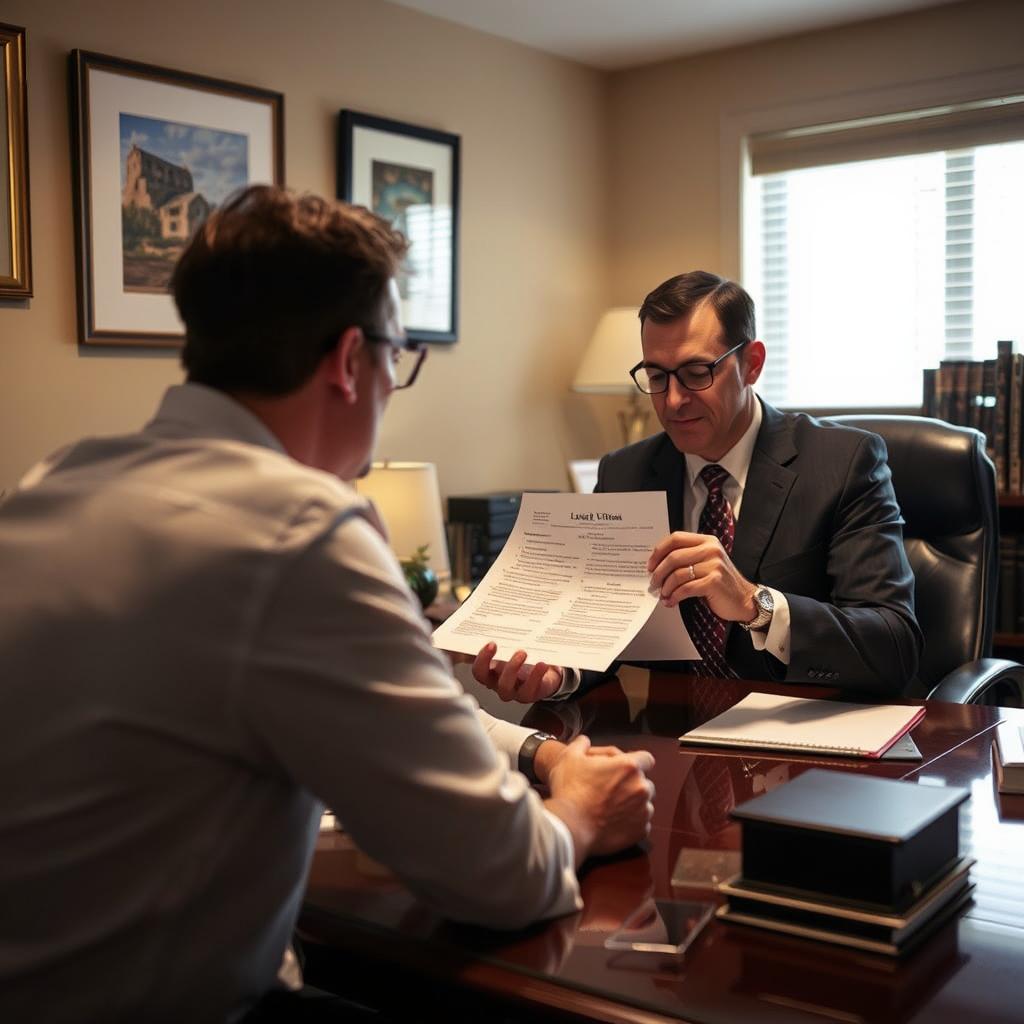
Grand Larceny Lawyer Rockingham County, VA
Grand larceny charges in Rockingham County involve serious felony allegations that can alter a person’s future. Virginia law defines grand larceny under Va. Code § 18.2-95 as the theft of property valued at $1,000 or more or the taking of any item directly from another person regardless of its price. Rockingham County prosecutes these offenses in the Rockingham County Circuit Court after a preliminary hearing in the Rockingham/Harrisonburg General District Court. The Commonwealth’s Attorney for Rockingham County handles the prosecution, and the court system follows the Twenty-sixth Judicial District’s procedures. Mr. Sris and his Of Counsel at Law Offices Of SRIS, P.C. represent individuals facing grand larceny allegations in Harrisonburg, Bridgewater, Dayton, Elkton, Timberville, Broadway, and throughout the county. The firm has handled criminal defense matters since 1997, drawing on a former prosecutor’s insight and a team of experienced defense attorneys who understand how Virginia grand larceny cases are built and where they can be challenged. For a consultation about your specific situation, call (888) 437-7747. Law Offices Of SRIS, P.C. — Advocacy Without Borders.
Grand larceny in Virginia is a felony punishable by one to twenty years imprisonment, or at the jury’s discretion up to twelve months in jail, plus a fine of up to $100,000. The charge applies when the value of the property taken is $1,000 or more, or when the theft is committed directly from another person regardless of value.
Source: Va. Code § 18.2-95. Virginia LIS
Reviewed by Mr. Sris, admitted in VA/MD/DC/NJ/NY.
What Grand Larceny Means in Rockingham County
Rockingham County spans a region that includes the City of Harrisonburg, James Madison University, and a network of rural communities served by I-81 and Routes 11, 33, and 42. The area’s mix of commercial centers and residential neighborhoods creates a setting where theft allegations can arise in a variety of contexts—from retail shoplifting incidents to disputes over property ownership. When the alleged value reaches $1,000 or when an item is claimed to have been taken directly from a person, the charge crosses from a Class 1 misdemeanor petit larceny into felony grand larceny territory.
The Rockingham/Harrisonburg General District Court at 53 Court Square in Harrisonburg conducts initial appearances and preliminary hearings for felony charges. If a judge finds probable cause, the matter moves to the Rockingham County Circuit Court for trial. The Circuit Court process includes the right to a jury trial and carries the potential for significant prison time. Because grand larceny is a felony, a conviction can also affect employment opportunities, professional licenses, and firearm rights. The specific procedures in Rockingham County—from bond hearings at the magistrate’s office to the scheduling calendar in Circuit Court—shape how defense counsel prepares a case. Mr. Sris and his Of Counsel have appeared in Rockingham County courts for years, giving them practical familiarity with local prosecutors and judicial practices.
How Mr. Sris and His Of Counsel Handle Grand Larceny Cases
Defending a grand larceny charge requires a thorough examination of the evidence and the legal theory behind the prosecution’s case. Mr. Sris, a former prosecutor who founded the firm in 1997, approaches each matter by evaluating every element the Commonwealth must prove: whether the accused took the property, whether the value meets the $1,000 threshold, whether the taking was unauthorized, and whether the prosecution can establish the chain of custody for the items allegedly stolen. His Of Counsel team brings extensive criminal defense experience, including a background that includes insight into how law enforcement investigations are conducted. They scrutinize police reports, witness statements, and any video surveillance or receipt records that may cast doubt on the prosecution’s valuation or identification.
The firm works to identify procedural and evidentiary weaknesses early. In Rockingham County, this can mean filing motions to challenge the sufficiency of the evidence at the preliminary hearing stage or negotiating with the Commonwealth’s Attorney to amend the charge to a lesser offense where the facts support it. Because Virginia permits plea agreements under Rule 3A:8 of the Rules of the Supreme Court of Virginia, the defense can explore resolutions that may reduce the exposure from a felony to a misdemeanor, depending on the circumstances. If a trial becomes necessary, the team prepares witness examination strategies, jury instructions, and sentencing presentations tailored to the Rockingham County Circuit Court. The goal is always to pursue the most favorable outcome available under the law, with full transparency about the risks and opportunities at each stage.
About Mr. Sris and His Of Counsel Team
Mr. Sris, Owner and Founder of Law Offices Of SRIS, P.C., has practiced criminal defense in Virginia since 1997. His background as a former prosecutor gives him a critical perspective on how the Commonwealth builds a grand larceny case and where the defense should focus its efforts. He has testified before the Virginia House Courts of Justice Committee in support of 2019 HB 635 (chief patron Del. David Bulova), a legislative effort that revised Virginia’s equitable distribution statute. Mr. Sris is admitted to practice in Virginia, Maryland, the District of Columbia, New Jersey, and New York.
Mr. Sris is supported by a team of Of Counsel attorneys who concentrate on criminal defense. Together, they bring over 120 years of combined legal experience and have achieved over 4,739 documented firm-wide results in felony and misdemeanor matters. Results may vary. The firm’s Of Counsel lawyers include professionals with public-safety backgrounds and extensive trial experience, which strengthens the team’s ability to challenge prosecution evidence, cross-examine witnesses, and present effective arguments in court. Mr. Sris and his Of Counsel have handled thousands of criminal matters across Virginia, and their work in Rockingham County draws on that breadth of experience to build a defense strategy suited to each client’s specific circumstances.
Frequently Asked Questions
What is grand larceny in Virginia?
Grand larceny is the theft of property valued at $1,000 or more, or any theft committed directly from another person, and it is a felony under Va. Code § 18.2-95. Even if an item is worth only a few dollars, taking it from someone’s pocket or hand makes the offense grand larceny. The $1,000 threshold was raised in 2020, so older cases may have been classified differently. Theft of a firearm also qualifies as grand larceny regardless of its dollar value. In Rockingham County, these charges are initially heard in the General District Court before being certified to the Circuit Court if the case proceeds to trial.
What are the penalties for grand larceny in Virginia?
A conviction for grand larceny carries a sentence of one to twenty years in prison, although the jury has the discretion to impose up to twelve months in jail instead. A fine of up to $100,000 may also be imposed. Because grand larceny is a felony, a conviction can result in the loss of certain civil rights, including the right to vote and possess firearms. The actual sentence depends on factors such as the defendant’s prior record, the circumstances of the offense, and any mitigating evidence presented. In Rockingham County, judges consider sentencing guidelines and victim-impact statements when determining the appropriate sentence.
How does a Virginia lawyer defend against grand larceny charges?
Defense strategies for grand larceny focus on challenging the evidence of the theft, the valuation of the property, or the identification of the accused. An attorney may argue that the property was not actually taken without permission, that the value does not meet the $1,000 threshold, or that the defendant was misidentified. Other approaches include motions to suppress evidence obtained unlawfully, negotiating with the prosecutor to reduce the charge to petit larceny, or presenting a defense of mistake or claim of right. Each defense is tailored to the specific facts of the case, and Mr. Sris and his Of Counsel evaluate every angle before recommending a strategy.
What should I do if I am charged with grand larceny in Rockingham County?
Contact a criminal defense lawyer immediately and do not discuss the allegations with police, friends, or family before obtaining legal advice. Preserve any documents, receipts, or communications that may relate to the property or transaction in question. The initial hearing at the Rockingham/Harrisonburg General District Court will determine whether the case proceeds, so early legal intervention is critical. Mr. Sris and his Of Counsel can advise you on bond proceedings, potential defenses, and the timeline for the case. To speak with the firm, call (888) 437-7747.
Is grand larceny a felony or a misdemeanor in Virginia?
Grand larceny is always a felony in Virginia. There is no misdemeanor version of grand larceny. If the value of the stolen property is less than $1,000 and the theft was not from a person, the charge is petit larceny, which is a Class 1 misdemeanor. The distinction can have significant consequences for a defendant’s record, so a central part of the defense often involves contesting the property’s valuation. Even a seemingly small difference—such as proving an item is worth $950 rather than $1,050—can change the charge from a felony to a misdemeanor.
Can grand larceny charges be reduced or dismissed?
Yes, grand larceny charges can be reduced to a misdemeanor or dismissed if the evidence is weak or if the prosecution agrees to an amended charge. Under Virginia’s plea-bargaining framework, the Commonwealth’s Attorney can agree to amend grand larceny to petit larceny if the facts support a lower valuation or if there are equitable reasons for leniency. In some cases, first-offender programs may apply, and deferred dispositions can lead to a dismissal after successful completion of probation. Every case is unique, and the outcome depends on the strength of the prosecution’s case, the defendant’s history, and the skill of defense counsel in presenting mitigating facts.
Primary sources: Virginia Code Title 18.2 (Crimes and Offenses) · Virginia Judicial System
Attorney advertising. Prior results do not guarantee a similar outcome.
Results may vary.
Case results depend on a variety of factors unique to each case.