
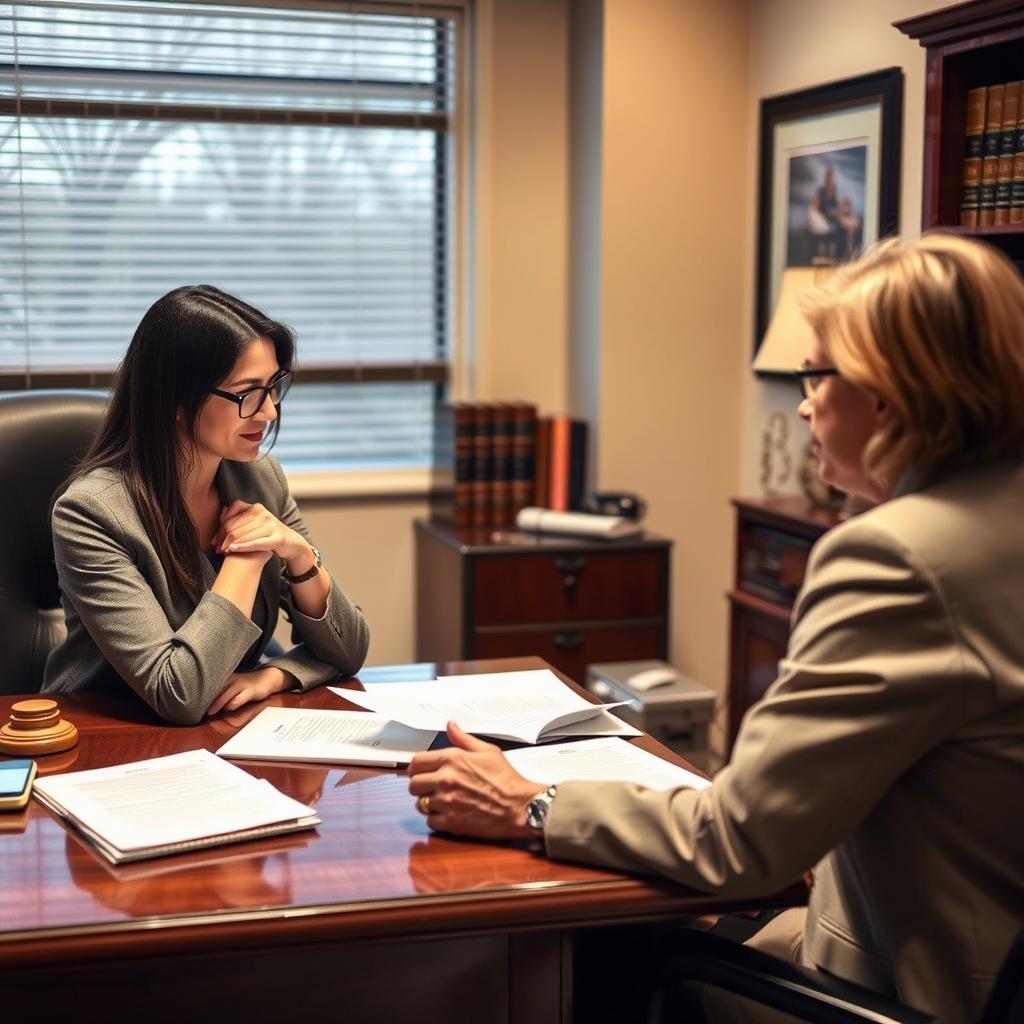
Fault Based Divorce Lawyer Shenandoah County, VA
In Shenandoah County, Virginia, a fault-based divorce allows a spouse to seek dissolution of marriage on grounds that place responsibility for the breakdown of the marriage on the other party. Under Va. Code § 20-91, fault grounds include adultery, cruelty, desertion for one year, and conviction of a felony with imprisonment exceeding one year. Unlike no-fault divorces—which require a 6‑month or 1‑year separation—certain fault grounds, notably adultery, carry no mandatory waiting period before filing. Shenandoah County Circuit Court at 112 S Main St in Woodstock holds exclusive original jurisdiction over all divorce actions here. For families in Woodstock, Edinburg, Strasburg, Mount Jackson, Toms Brook, and New Market, and for those traveling along the I‑81 corridor, understanding how fault can affect property division, support, and custody is critical. Law Offices Of SRIS, P.C. represents individuals pursuing or responding to fault‑based divorce claims throughout the county. To discuss your circumstances, reach Law Offices Of SRIS, P.C. at (888) 437-7747. Law Offices Of SRIS, P.C. – Advocacy Without Borders.
What Fault Based Divorce Means in Shenandoah County
A fault‑based divorce in Shenandoah County is a legal action that asserts a specific marital wrong as the reason for ending the marriage. Virginia is an equitable distribution state; the Circuit Court divides marital property fairly, but not necessarily equally, after considering the eleven statutory factors in Va. Code § 20-107.3. Proving fault can influence how the court weighs those factors—particularly the circumstances that contributed to the dissolution of the marriage—and may affect spousal support determinations.
Shenandoah County Circuit Court handles all divorce, equitable distribution, and spousal support matters. Standalone custody, visitation, child support, and protective‑order petitions are heard in the Shenandoah County Juvenile and Domestic Relations District Court. The Circuit Court sits in the Twenty‑Sixth Judicial District, and the clerk’s office receives filings during the court’s regular business hours. An individual must have been a domiciliary and resident of Virginia for at least six months before commencing a divorce suit (Va. Code § 20-97). Because fault allegations often hinge on admissible evidence—witness testimony, documentation, or electronic records—locating and preserving that evidence early is essential.
How Mr. Sris and the Firm’s Of Counsel Attorneys Handle Fault Based Divorce Cases
Once you engage Law Offices Of SRIS, P.C., the firm’s Of Counsel attorneys begin by evaluating the specific fault ground and the evidence supporting it. The initial consultation covers the statutory requirements for each ground, the burden of proof, and potential defenses. If the case moves forward, the attorney prepares a Complaint for Divorce that pleads the fault ground and files it in Shenandoah County Circuit Court. The complaint must be served on the other spouse in compliance with Virginia’s procedural rules; if the spouse cannot be located or lives out of state, alternative service methods may apply.
Throughout the litigation, the firm works to advance your objectives while recognizing that contested fault claims can increase both the duration and expense of a divorce. Settlement negotiations, mediation, and pretrial motions are explored where appropriate. If a trial becomes necessary, the attorney presents the evidence to the court and argues the impact of the proven fault on equitable distribution, support, and custody. Because fault‑based divorces often involve emotionally charged allegations, the firm works to keep the focus on facts and on achieving a clear, enforceable final decree.
About Mr. Sris and the Firm’s Of Counsel Attorneys
Mr. Sris, Owner and Founder of Law Offices Of SRIS, P.C., has practiced since 1997. A former prosecutor, he is admitted in Virginia, Maryland, the District of Columbia, New Jersey, and New York. Mr. Sris testified before the Virginia House Courts of Justice Committee in support of 2019 HB 635 (chief patron Del. David Bulova), a bill that revised Virginia’s equitable distribution statute. The firm’s Of Counsel attorneys bring extensive combined legal experience. Results may vary.
Every attorney who works on Shenandoah County divorce matters is Of Counsel to Law Offices Of SRIS, P.C. Together, Mr. Sris and the firm’s Of Counsel attorneys handle complex family law cases that involve business valuations, real estate division, retirement assets, and cross‑jurisdictional disputes. If you have questions about pursuing or defending a fault‑based divorce, contact the firm at (888) 437-7747 to schedule a consultation.
Frequently Asked Questions
How long does a divorce take in Shenandoah County, Virginia?
A contested fault-based divorce in Shenandoah County typically requires nine to eighteen months or longer, depending on the court’s calendar, the complexity of the issues, and the degree of cooperation between the parties. Uncontested divorces with a signed separation agreement can be finalized in two to four months from filing, while complex equitable distribution cases—especially those needing business valuations or forensic accounting—may extend twelve to twenty‑four months. The timeline varies with each case.
How much does a divorce cost in Shenandoah County, Virginia?
The filing fee for a divorce complaint in Shenandoah County Circuit Court is set by the court; sheriff service of process costs about $12; additional costs for a Guardian ad litem and mediation can raise overall expenses. Private process servers usually charge $50 to $100. When custody is disputed, a Guardian ad litem fee may range from $500 to $2,500 or more. Mediation can add $100 to $300 per hour per party. Actual legal fees depend on the complexity of the issues and whether the divorce is contested.
Is Virginia a community property state?
No, Virginia is an equitable distribution state—marital property is divided fairly but not necessarily 50/50. The court weighs eleven factors under Va. Code § 20-107.3, including each spouse’s contributions, the duration of the marriage, and the circumstances experienced to the divorce. Separate property (assets owned before marriage, inheritances, and certain gifts) is excluded from distribution. Shenandoah County Circuit Court handles all property division in divorce actions.
What are the grounds for divorce in Virginia?
Virginia law provides both no‑fault and fault‑based grounds for divorce under Va. Code § 20-91. No‑fault grounds require a six‑month separation (if no minor children and a written agreement exists) or a one‑year separation. Fault grounds include adultery (no waiting period), cruelty, willful desertion for one year, and conviction of a felony with imprisonment of more than one year. Adultery must be proven by clear and convincing evidence. The ground chosen can affect property division, spousal support, and the timeline of the case.
How is child custody decided in Shenandoah County, Virginia?
Custody and visitation decisions in Shenandoah County are based on the best interests of the child, using the ten factors enumerated in Va. Code § 20-124.3. The court evaluates each parent’s relationship with the child, their ability to support the child’s needs, any history of abuse, and the child’s preference if of suitable age. Custody may be addressed in the divorce proceeding at Circuit Court or as a standalone case in the Juvenile and Domestic Relations District Court. A fault ground such as cruelty or adultery can be relevant if it bears on a parent’s fitness.
Family Law in nearby counties: Family law representation in Clarke County · Frederick County divorce and family law · Warren County family law attorney · Family law services in Rockingham County · Augusta County divorce lawyer
Virginia law resources: Virginia Code Title 20, Chapter 6 (Divorce, Affirmation and Annulment) · Shenandoah County Circuit Court
Attorney advertising. Prior results do not guarantee a similar outcome.
Case results depend on a variety of factors unique to each case.