
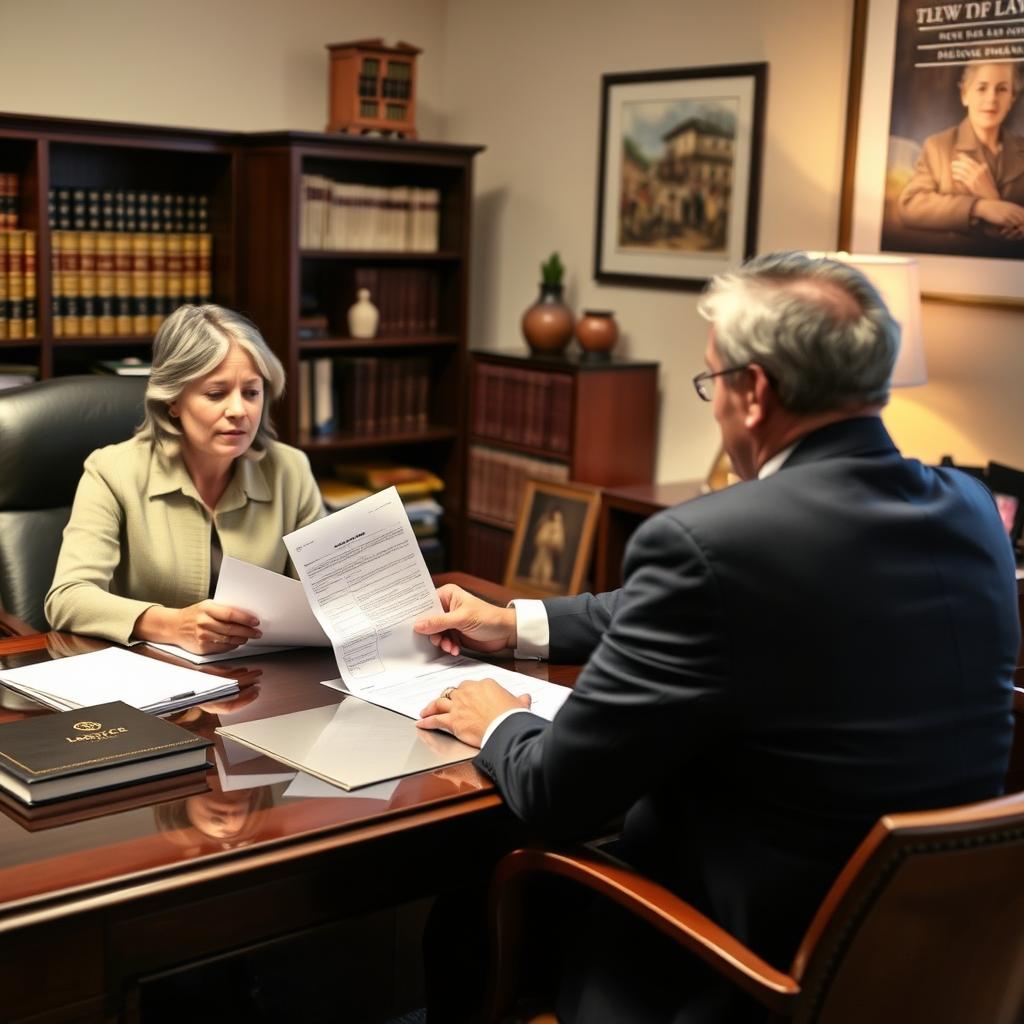
Fault Based Divorce Lawyer Rockingham County, VA
When a marriage founders in the Shenandoah Valley, the court that decides a fault‑based divorce is the Rockingham County Circuit Court at 53 Court Square in Harrisonburg. That single courthouse, part of Virginia’s Twenty‑sixth Judicial District, hears every contested dissolution, equitable‑distribution claim, and spousal‑support petition for the county. Law Offices Of SRIS, P.C. represents individuals through each stage of a fault‑based divorce proceeding, from filing the complaint to final decree. Mr. Sris, the firm’s Owner and Founder, has practiced family law since 1997 and appears regularly in Rockingham County courts. The firm has documented over 30 case results across all practice areas in Rockingham County, every one favorable. Results may vary. Past outcomes do not guarantee a similar result. To speak with an experienced family law attorney about your situation, reach our Shenandoah/Woodstock Location at (888) 437‑7747. Law Offices Of SRIS, P.C. — Advocacy Without Borders.
What Fault Based Divorce Means in Rockingham County
Virginia law permits a spouse to seek an absolute divorce on fault grounds as well as on no‑fault separation. The fault grounds are set out in Va. Code § 20‑91 and include adultery, cruelty that creates a reasonable apprehension of bodily harm, willful desertion for one year, and conviction of a felony followed by imprisonment of more than one year. Adultery, in particular, carries no mandatory separation period before the divorce may be granted. A fault‑based filing differs from a no‑fault separation divorce because the spouse alleging fault must prove the misconduct to the satisfaction of the court, and the finding can affect spousal support and equitable distribution.
In Rockingham County, the Circuit Court has exclusive original jurisdiction over the divorce itself, while the Juvenile and Domestic Relations District Court handles standalone custody, visitation, and support matters. A fault‑based divorce complaint is filed in the Circuit Court and proceeds much like other civil litigation, with discovery, motions, and, if necessary, a trial before a judge. The court applies the equitable‑distribution factors listed in Va. Code § 20‑107.3 when dividing marital property, and fault can be one of the factors the judge weighs. Because the evidentiary burden is on the complaining spouse, a fault‑based divorce frequently involves testimony, documents, and sometimes expert witnesses. Timeframes vary with the complexity of the issues and the court’s calendar; a case with disputed fault allegations typically takes longer to resolve than an uncontested separation matter.
How Mr. Sris and His Of Counsel Handle Fault Based Divorce Cases
Mr. Sris and the firm’s Of Counsel attorneys approach a fault‑based divorce with a focus on thorough preparation and realistic case assessment. They begin by evaluating the evidence available to support—or defend against—the fault allegation, because the strength of that evidence often shapes strategy from the outset. They explain Virginia’s equitable‑distribution framework in plain terms, helping clients understand what a fault finding could mean for property division, spousal support, and even attorney‑fee awards. The team draws on extensive experience in Virginia family law to identify the issues that matter most to the court.
Once a strategy is set, Mr. Sris and his Of Counsel handle every procedural step, from drafting the complaint and managing discovery to negotiating settlement terms where possible. They prepare cases for trial when a settlement cannot be reached, drawing on decades of combined experience in contested litigation. Throughout the process, the firm works to protect clients’ interests while keeping them informed about the practical realities of a fault‑based proceeding. Past results do not guarantee a similar outcome, but the firm is committed to pursuing a fair resolution in each matter. To discuss your case, call (888) 437‑7747.
About Mr. Sris and His Of Counsel Team
Mr. Sris, Owner and Founder of Law Offices Of SRIS, P.C., has practiced law since 1997. A former prosecutor, he brings firsthand trial experience to every family law matter. Mr. Sris is admitted to the bars of Virginia, Maryland, the District of Columbia, New Jersey, and New York. His practice concentrates on complex family law disputes, including fault‑based divorce, equitable distribution, and custody litigation. Mr. Sris testified before the Virginia House Courts of Justice Committee in support of 2019 HB 635 (chief patron Del. David Bulova), reflecting his thorough understanding of Virginia’s domestic‑relations statutes. Together with his Of Counsel, the team brings over 120 years of combined legal experience and has documented 4,739+ firm-wide results. Results may vary. Every Of Counsel attorney is an experienced practitioner who contributes substantial knowledge to the firm’s family‑law work.
Frequently Asked Questions
How long does a fault‑based divorce take in Rockingham County?
A fault‑based divorce in Rockingham County generally takes longer than an uncontested no‑fault case because the court must receive evidence on the alleged misconduct. Uncontested divorces in Virginia can resolve in roughly two to four months after filing, but a contested divorce with fault allegations, custody disputes, and property division routinely takes nine to eighteen months. When business‑valuation issues or complex retirement assets are involved, the timeline can be longer. The Rockingham County Circuit Court schedules hearings according to its calendar, and every case progresses differently. For specific guidance about your matter, reach Law Offices Of SRIS, P.C. at (888) 437‑7747.
What are the grounds for a fault‑based divorce in Virginia?
Under Va. Code § 20‑91, the recognized fault grounds are adultery, cruelty, willful desertion for one year, and conviction of a felony followed by imprisonment of more than one year. Adultery is a ground that has no waiting period—the divorce can proceed as soon as the evidence is gathered and the complaint is filed. The other grounds require the statutory period to have run before filing. A spouse alleging fault must prove the misconduct by a preponderance of the evidence, and the finding can affect alimony and property distribution. To understand how these grounds might apply to your situation, contact our Shenandoah/Woodstock Location.
How is marital property divided in a fault‑based divorce?
Virginia is an equitable‑distribution state, meaning property is divided fairly but not necessarily equally, and fault can be one of the factors the court considers. Under Va. Code § 20‑107.3, the court classifies property as marital, separate, or hybrid, then distributes it after weighing eleven statutory factors. Those factors include the duration of the marriage, each spouse’s contributions, the circumstances that led to the divorce, and any waste of marital assets. A finding of fault—such as adultery—may influence the court’s decision. For a personalized analysis, call (888) 437‑7747 to schedule a consultation.
Do I need a lawyer for a fault‑based divorce in Rockingham County?
You are not required to have a lawyer, but a fault‑based divorce raises evidentiary and procedural issues that can be difficult to handle without experienced legal guidance. Proving cruelty or adultery, for instance, often requires witness testimony, documentary evidence, and careful compliance with the rules of evidence. Mistakes in pleading or discovery can delay the case or weaken the claim. An attorney familiar with the Rockingham County Circuit Court and Virginia’s divorce statutes can help you evaluate your evidence, protect your rights, and work toward a favorable outcome. Contact Law Offices Of SRIS, P.C. to discuss whether representation is right for you.
What should I bring to a consultation about a fault‑based divorce?
Bring any documents that relate to the alleged fault, the marriage, and your finances, such as emails, text messages, bank statements, tax returns, and prenuptial agreements. Details about the timeline of the fault conduct, witnesses who may have information, and a list of marital assets and debts are also helpful. The more complete the picture you provide, the better the attorney can assess the strength of your case. All communications during a consultation are confidential. Reach our Shenandoah/Woodstock Location at (888) 437‑7747 to set an appointment.
Related family law resources serving nearby counties:
Clarke County Family Law Lawyer ·
Shenandoah County Family Law Lawyer ·
Frederick County Family Law Lawyer ·
Warren County Family Law Lawyer
Virginia primary sources:
Va. Code § 20‑91 (Divorce grounds) ·
Rockingham County Circuit Court ·
Virginia Court System
Attorney advertising. Prior results do not guarantee a similar outcome. Results may vary.
Case results depend on a variety of factors unique to each case.