
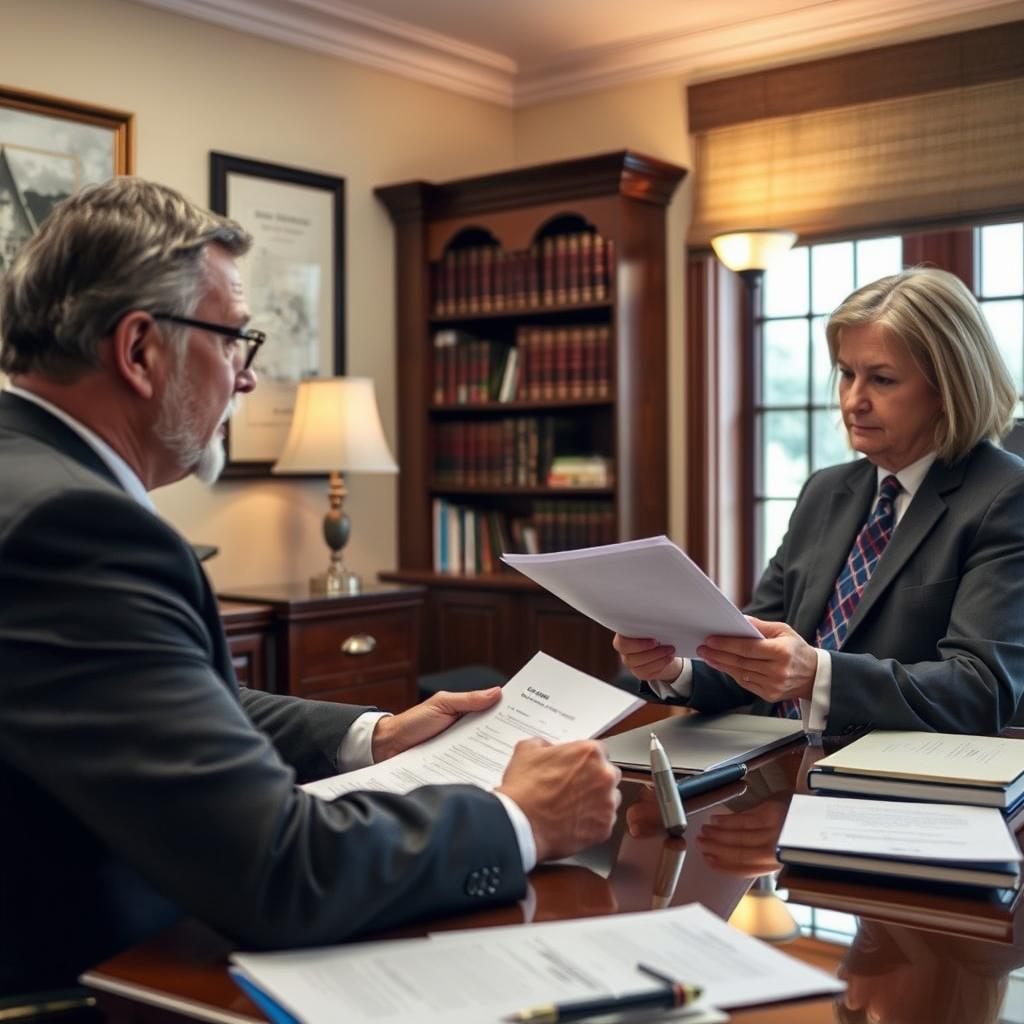
Complex Property Division Lawyer Woodstock, VA
When a marriage ends and significant assets are involved—business interests, professional practices, retirement accounts, real estate holdings, or investment portfolios—the process of dividing property requires careful legal analysis. In Woodstock and throughout Shenandoah County, Virginia’s equitable distribution statute governs how marital property is classified, valued, and allocated between the parties. The Circuit Court for the Twenty-Sixth Judicial District, sitting in Woodstock, has exclusive jurisdiction over divorce and property division, while the Woodstock Juvenile and Domestic Relations District Court addresses related custody and support matters. Law Offices Of SRIS, P.C., practicing since 1997, represents clients in complex property division cases throughout the Shenandoah Valley. To request a consultation, reach our Woodstock location at (888) 437-7747. Law Offices Of SRIS, P.C. – Advocacy Without Borders.
What Complex Property Division Means in Woodstock, Virginia
Virginia is an equitable distribution state, not a community property state. Under Va. Code § 20-107.3, the court identifies which assets are marital, which are separate, and which may be a mix of both. Marital property includes assets acquired during the marriage by either spouse, regardless of whose name is on the title. Separate property—assets owned before the marriage or received as a gift or inheritance—is generally not divided. The court then distributes the marital estate in a manner it considers equitable, or fair, after weighing eleven statutory factors. These factors include the duration of the marriage, each spouse’s contributions to the family’s welfare and to the acquisition of property, the age and health of the parties, and the tax consequences of any division.
In Shenandoah County, complex property division often arises when a couple’s financial life includes assets beyond a simple home and bank accounts. Business owners in Woodstock, Edinburg, Strasburg, or Mount Jackson may need to value a closely held company or professional practice. Farmers and landowners along the I-81 corridor may have agricultural real estate, equipment, or timber rights that require appraisal. Retirement accounts such as 401(k)s, IRAs, and government pensions must be divided through a qualified domestic relations order (QDRO) to avoid tax penalties. Stock options, restricted stock units, and executive compensation packages add further layers of analysis. Law Offices Of SRIS, P.C. is experienced with the valuation methods and legal instruments needed to address these assets in the Woodstock Circuit Court, which hears divorce cases for the Twenty-Sixth Judicial District. The court follows Virginia’s statutory framework, and each case turns on the specific facts presented.
How Mr. Sris and His Of Counsel Handle Complex Property Division Cases
Complex property division begins with a thorough identification of all assets and liabilities. That step may involve reviewing tax returns, business records, deeds, financial statements, and employment agreements. When necessary, outside professionals such as forensic accountants, business valuation attorneys, or real estate appraisers are engaged to provide independent assessments. Mr. Sris and his Of Counsel team then work to classify each asset under Virginia law and to build a factual record supporting a fair distribution.
The procedural path depends on whether the divorce is contested or uncontested. If the parties reach a written separation agreement that addresses all property, support, and custody issues, and they meet the statutory separation period, the case can proceed on an uncontested basis. When the parties cannot agree—often the case with high-value or complex assets—the matter moves to a contested hearing in the Circuit Court. At trial, the judge considers the testimony, documentary evidence, and expert reports before applying the factors listed in Va. Code § 20-107.3. Mr. Sris and his Of Counsel prepare each case with the understanding that the court’s goal is an equitable result, not necessarily an equal split. They work to achieve an outcome that reflects the contributions and needs of their client. Results may vary.
About Mr. Sris and His Of Counsel Team
Mr. Sris, Owner and Founder of Law Offices Of SRIS, P.C., is a former prosecutor who founded the firm in 1997. He is admitted to practice in Virginia, Maryland, the District of Columbia, New Jersey, and New York. Mr. Sris testified before the Virginia House Courts of Justice Committee in support of 2019 HB 635 (chief patron Del. David Bulova), which revised the equitable distribution statute. His Of Counsel attorneys are experienced practitioners who, together with Mr. Sris, bring over 120 years of combined legal experience. Results may vary. The team serves clients from the firm’s Shenandoah location at 505 N Main St, Suite 103, Woodstock, VA 22664, by appointment. To request a consultation, call (888) 437-7747.
Virginia’s equitable distribution statute lists eleven factors the court must consider when dividing marital property.
Source: Va. Code § 20-107.3. Virginia Code § 20-107.3
Reviewed by Mr. Sris, admitted in VA/MD/DC/NJ/NY.
Mr. Sris and his Of Counsel team have documented over 4,739 case results across all practice areas since 1997. Results may vary.
Source: Firm case records. Documented results include all jurisdictions.
Reviewed by Mr. Sris, admitted in VA/MD/DC/NJ/NY.
Frequently Asked Questions
What is considered complex property in a Virginia divorce?
Complex property includes assets that require specialized valuation, such as closely held businesses, professional practices, multiple real estate holdings, retirement accounts, stock options, and investment portfolios. These assets cannot be divided simply by splitting a bank account. In a Woodstock divorce, the court examines the nature and origin of each asset to determine whether it is marital or separate. Valuation of a family business or a farm, for example, often involves forensic accounting and appraisals. The division of pension and retirement plans typically requires a qualified domestic relations order (QDRO) to avoid tax penalties and ensure proper transfer. Law Offices Of SRIS, P.C. handles these matters throughout Shenandoah County. For a consultation, reach our location at (888) 437-7747.
How does the Woodstock Circuit Court divide property in a divorce?
The court follows the equitable distribution framework in Va. Code § 20-107.3, classifying all property as marital, separate, or hybrid, then dividing the marital portion based on eleven statutory factors. In the Twenty-Sixth Judicial District, which includes Shenandoah County, Circuit Court judges hear testimony and review evidence to determine what is fair under the statute. The court may award a larger share of the marital estate to one spouse if the facts justify it—for instance, if one spouse contributed significantly more to the acquisition of assets or if there are economic disparities. The court can also order the payment of a monetary award to balance the equities. Each case is fact-specific, and the timeline varies by case complexity and the court’s calendar.
Do I need a lawyer for dividing a business in a Shenandoah County divorce?
While not legally required, having experienced legal representation is important when a business is part of the marital estate, because valuing and dividing a business involves financial and legal complexities. A business may need to be valued as a going concern, and issues such as goodwill, owner compensation, and minority discounts can affect the final figure. Mr. Sris and his Of Counsel team work with valuation professionals and accountants to present a clear picture to the court. They also advise clients on whether a buy-out, asset sale, or other arrangement is feasible. To discuss your situation, contact Law Offices Of SRIS, P.C. at (888) 437-7747. Results may vary.
How are retirement accounts divided in a Virginia divorce?
Retirement accounts acquired during the marriage are generally marital property and their division requires a qualified domestic relations order (QDRO) or similar court order to avoid early-withdrawal penalties. The QDRO instructs the plan administrator on how to allocate benefits between the parties. Plans such as 401(k)s, 403(b)s, IRAs, and government pensions each have their own rules. In Woodstock, the Circuit Court incorporates the QDRO into the final divorce decree. Law Offices Of SRIS, P.C. assists clients in preparing the necessary orders and coordinating with plan administrators. Because tax consequences can be significant, careful drafting is essential.
What if my spouse and I agree on how to divide property?
If both parties agree on the division of assets and debts, they can execute a written separation agreement that addresses all property, support, and custody issues, which may then be incorporated into a final divorce decree. An uncontested divorce can be more efficient and less costly than litigation, but the agreement must still be fair and comply with Virginia law. The court reviews the agreement to ensure it is not unconscionable. Even with an agreement, complex assets still require proper valuation and documentation. Mr. Sris and his Of Counsel can draft or review a property settlement agreement to protect your interests. Reach our Woodstock location at (888) 437-7747 for a consultation.
Where does the court hear divorce cases in Shenandoah County?
Divorce cases, including property division, are heard in the Shenandoah County Circuit Court, located at 112 S Main St, Woodstock, VA 22664. This court serves the entire county, including Woodstock, Edinburg, Strasburg, Mount Jackson, Toms Brook, and New Market. Related matters such as child custody and support are handled in the Shenandoah County Juvenile and Domestic Relations District Court. Law Offices Of SRIS, P.C. Appears regularly in these courts and is familiar with local procedures. The court operates by appointment; clients should contact the firm to schedule a consultation before filing.
For additional family law resources in other Virginia localities, see: Fairfax County Family Law Lawyer, Fairfax City Family Law Lawyer, Falls Church Family Law Lawyer, Prince William County Family Law Lawyer, Manassas Family Law Lawyer.
Primary sources: Virginia Code Title 20 (Domestic Relations) • Virginia’s Judicial System
Attorney advertising. Prior results do not guarantee a similar outcome. Case results depend on a variety of factors unique to each case. Results may vary.