
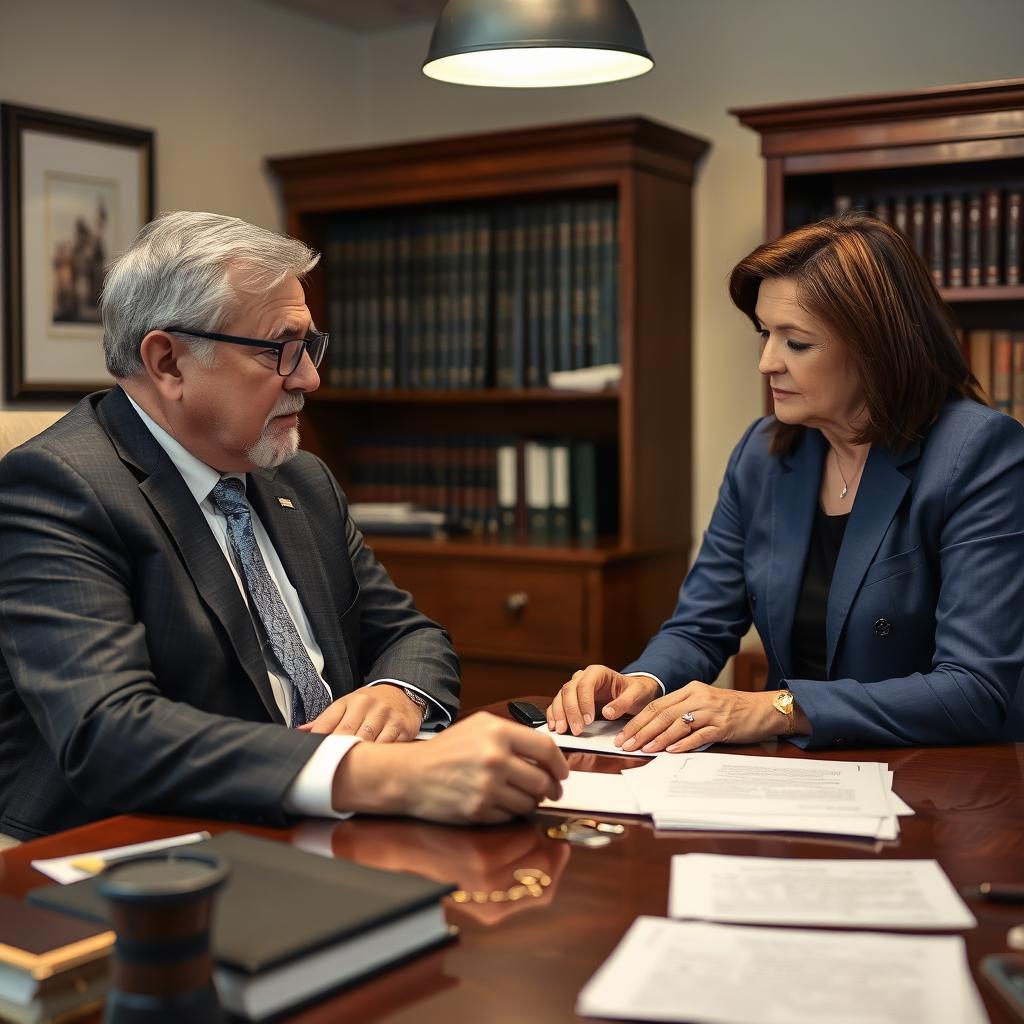
Property Settlement Lawyer Shenandoah County, VA
When a marriage ends, the financial issues—who gets the house, the retirement accounts, the business—can be overwhelming. Virginia law requires courts to distribute marital property equitably, considering both financial and non‑financial contributions to the marriage. In Shenandoah County, these matters are heard in the Shenandoah County Circuit Court, where the judge has wide discretion under Va. Code § 20‑107.3. A property settlement agreement, if properly drafted, can avoid litigation and give both parties control over the outcome. Mr. Sris, a former prosecutor with extensive family law experience, and the firm’s Of Counsel attorneys assist clients through negotiation, mediation, and trial when necessary. The firm serves residents of Woodstock, Edinburg, Strasburg, Mount Jackson, and the surrounding communities throughout Shenandoah County. Contact Law Offices Of SRIS, P.C. at (888) 437‑7747 to request a consultation. Law Offices Of SRIS, P.C. – Advocacy Without Borders.
What Property Settlement Means in Shenandoah County
In Virginia, property division in a divorce is governed by the principle of equitable distribution, not community property. The court must classify all assets as either marital, separate, or hybrid. Marital property includes most assets acquired during the marriage, while separate property includes assets owned before the marriage, or acquired by gift or inheritance. The judge then values the marital estate and divides it based on statutory factors listed in Va. Code § 20‑107.3: the duration of the marriage, each spouse’s contributions to the family’s well‑being, the ages and health of the parties, the tax consequences of a proposed division, and other considerations. The Shenandoah County Circuit Court has exclusive jurisdiction over divorce and property division, making familiarity with local court practice an important element of effective representation.
A property settlement agreement—often called a separation agreement—allows spouses to negotiate their own property division and avoid a contested trial. Such agreements can be incorporated into the final divorce decree, making them enforceable. In Shenandoah County, most family law matters resolve through negotiated settlements, but when parties cannot agree, the court will determine the outcome after hearing evidence. Law Offices Of SRIS, P.C. handles both simple and complex marital estates, including those that involve family businesses, professional practices, substantial retirement accounts, and out‑of‑state real property.
How Mr. Sris and the Firm’s Of Counsel Attorneys Handle Property Settlement Cases
An effective property settlement begins with a thorough inventory and valuation of the marital estate. Mr. Sris and the firm’s Of Counsel attorneys work with clients to identify all assets and debts, determine whether property is marital or separate, and assess the trusted strategy for achieving a fair division. The firm’s experience includes matters that require forensic accountants, business valuation attorneys, or real estate appraisers. When retirement assets are involved, the division often requires a qualified domestic relations order (QDRO). Mr. Sris testified before the Virginia House Courts of Justice Committee in support of 2019 HB 635 (chief patron Del. David Bulova), which revised subsection (g) of § 20‑107.3 to clarify QDRO‑related procedures, reflecting his familiarity with the technical aspects of dividing retirement benefits—a common issue in property settlement cases.
If litigation becomes necessary, the firm’s attorneys appear in the Shenandoah County Circuit Court and present a clear picture of the marital estate. The goal is to achieve a fair outcome while helping clients understand the process and make informed decisions. The firm handles the full range of property settlement matters, from uncontested divorces with straightforward property division to high‑asset cases that involve complex financial instruments and business interests.
About Mr. Sris and the Firm’s Of Counsel Attorneys
The legal team for property settlement matters in Shenandoah County includes Mr. Sris, Owner and Founder of Law Offices Of SRIS, P.C., and experienced Of Counsel attorneys who contract directly with the firm. Together, they bring extensive combined legal experience. Mr. Sris is a former prosecutor and has concentrated in family law for many years. The firm’s Of Counsel attorneys contribute a broad range of litigation and negotiation experience. Results may vary.
Frequently Asked Questions
What is property settlement in a Virginia divorce?
Property settlement is the process of dividing a couple’s assets and debts in a divorce. In Virginia, the court follows equitable distribution, which means it divides property fairly—not necessarily equally—based on factors set out in Va. Code § 20‑107.3. The process involves identifying marital and separate property, valuing the marital estate, and determining how each asset should be allocated. A negotiated agreement between the spouses can resolve property division without a trial.
What is the difference between marital and separate property in Virginia?
Marital property is generally any property acquired by either spouse during the marriage, while separate property is property owned before the marriage or received by gift or inheritance. Under Virginia law, separate property remains with the spouse who owns it, and the court does not divide it. Marital property is subject to equitable distribution. Some property may be classified as hybrid, meaning part is marital and part is separate, which requires careful tracing and valuation.
Can we agree on property division outside of court?
Yes; spouses can negotiate and sign a property settlement agreement, which resolves the division of assets and debts without a court hearing. This agreement can be enforced as part of the final divorce decree. A well‑drafted agreement gives both parties control over the outcome and can save time, expense, and the uncertainty of litigation. In Shenandoah County, the Circuit Court will incorporate a valid agreement into the divorce order if it meets statutory requirements.
How are retirement accounts and pensions divided in a Shenandoah County divorce?
Retirement accounts and pensions are usually marital property to the extent they were earned during the marriage, and they are typically divided through a qualified domestic relations order (QDRO). A QDRO instructs the plan administrator to pay a portion of the benefit directly to the former spouse. Subsection (g) of Va. Code § 20‑107.3 authorizes direct payment of the marital share of retirement plans. Handling QDROs correctly is important to avoid tax penalties and ensure the division is enforced.
Do I need a lawyer for property settlement in Shenandoah County?
You are not required to have a lawyer, but property division involves significant financial and legal issues, and mistakes can affect your future. An attorney can help identify all marital and separate property, value complex assets, negotiate a fair settlement, and ensure the agreement complies with Virginia law. Law Offices Of SRIS, P.C. offers consultations by appointment. Reach the firm at (888) 437‑7747.
What if my spouse is hiding assets during a property settlement?
Hidden assets are a serious concern; the court can consider evidence of concealment and may award a larger share of the estate to the other spouse. Discovery tools such as interrogatories, requests for production of documents, and depositions can uncover undisclosed accounts, transfers, or undervalued property. An experienced attorney works with forensic accountants to trace assets and present the findings to the court. Shenandoah County Circuit Court judges have broad equitable powers to address dissipation of marital property.
Also serving: Clarke County family law lawyer | Frederick County family law lawyer | Warren County family law lawyer | Rockingham County family law lawyer | Augusta County family law lawyer
Attorney advertising. Prior results do not guarantee a similar outcome.
Case results depend on a variety of factors unique to each case.