
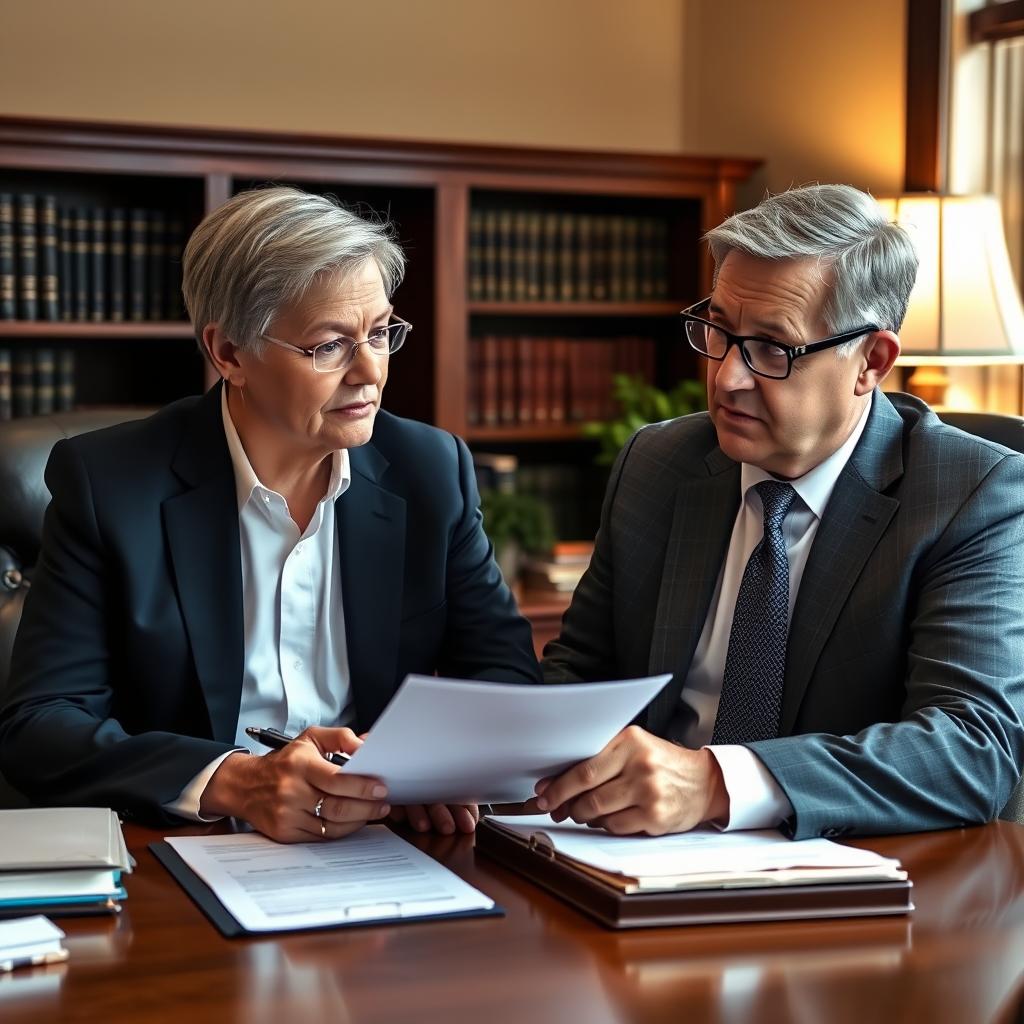
Rehabilitative Alimony Lawyer Clarke County, VA
You’ve spent months finalizing your divorce in Clarke County. Just when you think it’s over, your former spouse asks the court to order rehabilitative alimony — monthly payments so they can go back to school or get job training. Suddenly you’re facing a new round of legal uncertainty. You need to understand what the court can order, how long payments might last, and what you can do to protect your financial future. That’s where guidance from an experienced family law attorney becomes essential.
Strategy options for rehabilitative alimony cases
Rehabilitative alimony is designed to give a spouse time and resources to become self-supporting. In Virginia, judges look at the factors in Va. Code § 20-107.1 — the length of the marriage, each spouse’s earning capacity, contributions to the family, and the time and education needed to re‑enter the workforce. There is no fixed formula, so you have room to argue.
Your approach may focus on challenging whether the request is reasonable. Is the proposed training truly necessary? Could the requesting spouse already find suitable employment? Is the requested amount out of line with what your budget can sustain? A thorough strategy also examines the other side’s financial disclosures — sometimes income or asset information doesn’t tell the whole story. When you work with us, we build a presentation that speaks directly to what the judge must weigh.
What to expect in a Clarke County rehabilitative alimony case
Spousal support matters are heard by the Clarke County Circuit Court at 104 North Church Street in Berryville. The court does not automatically award rehabilitative alimony — the spouse who wants it must present evidence. That often means bringing in a vocational experienced attorney to testify about the job market and the time needed for training.
You can expect to exchange financial documents, respond to discovery, and possibly attend a pendente lite hearing for temporary support while the case moves forward. The judge will consider the Va. Code § 20-107.1 factors and then decide whether an award is appropriate, how much, and for how long. Because every case turns on its own facts, having an attorney who can organize the evidence and cross‑examine the other side’s witnesses makes a real difference.
What you should know about rehabilitative alimony
Virginia is an equitable distribution state, meaning marital property is divided fairly — not necessarily equally — and spousal support is separate from property division. Rehabilitative alimony is just one type; a court could also order permanent support in long marriages or where a spouse cannot become self‑supporting.
The critical point is that rehabilitative alimony is not indefinite. It is meant to bridge a gap. The court sets a timeframe based on the evidence, but either side can later ask to modify the order if circumstances change — for example, if the receiving spouse finishes training sooner than expected or fails to make a good‑faith effort. We work to make sure the order reflects what is genuinely necessary, not what the other side simply wants.
Mr. Sris and the firm’s Of Counsel attorneys
Mr. Sris, Owner and Founder of Law Offices Of SRIS, P.C., is a former prosecutor with extensive courtroom experience. He founded the firm in 1997 and has practiced family law across Virginia, Maryland, the District of Columbia, New Jersey, and New York ever since. Together with the firm’s Of Counsel attorneys, Mr. Sris brings extensive combined legal experience to every rehabilitative alimony matter. Results may vary.
The team understands how Clarke County judges evaluate spousal support claims and how to present a compelling case. You get a deep bench of experience without the layer of associates — you work directly with seasoned attorneys who know the local courts.
Frequently asked questions
What exactly is rehabilitative alimony?
Rehabilitative alimony is temporary spousal support paid to help a former spouse gain education or job training so they can become self‑supporting. In Virginia, it is ordered under Va. Code § 20-107.1 when a judge finds that support is needed while the recipient prepares to enter or re‑enter the workforce. It ends once the training period is complete or the court’s deadline passes.
How does the court decide whether to award rehabilitative alimony?
The judge weighs the factors listed in Va. Code § 20-107.1 — the marriage’s length, each person’s earning ability, contributions to the family, the standard of living during the marriage, and the time and expense required for education. No one factor controls; the court looks at the total picture. A spouse seeking support must prove the need for training and that it is feasible.
How long does rehabilitative alimony last in Virginia?
The duration is tied to the specific training plan the court approves — enough time to complete a degree or certification program, for example. There is no automatic cutoff; it depends on the evidence. If the receiving spouse finishes early or stops making progress, you can ask the court to end or reduce payments early.
Can a rehabilitative alimony order be changed later?
Yes, either party may petition the Clarke County Circuit Court to modify the order if there has been a material change in circumstances. Common reasons include the recipient’s completion of training, a new job that makes self‑support possible, or a significant change in either person’s income. The judge will revisit the same statutory factors.
What if I cannot afford to pay what my spouse is asking for?
The court looks at both sides’ financial realities. If paying the requested amount would leave you unable to meet your own reasonable needs, you can present evidence that the amount is excessive. Judges are required to consider the paying spouse’s ability to pay — not just the recipient’s need.
Do I need to hire a lawyer for a rehabilitative alimony hearing in Clarke County?
You are not required to hire a lawyer, but having experienced counsel is important because the outcome depends on how well the evidence is presented. The judge has wide discretion, and a skilled attorney can frame the financial picture, challenge dubious vocational claims, and protect your long‑term interests.
Where can I find a rehabilitative alimony attorney near me in Clarke County?
Law Offices Of SRIS, P.C. serves clients in Clarke County from its Ashburn Location and appears regularly before the Clarke County Circuit Court. You can reach us at (888) 437‑7747 to schedule a consultation with Mr. Sris and the firm’s Of Counsel attorneys.
How are rehabilitative alimony and property division different?
Property division splits what you own; spousal support is an ongoing payment from one spouse’s income to the other. The two are decided separately. However, the property division can affect support — for example, a spouse who receives a large asset may need less monthly help. We address both pieces to create a cohesive overall strategy.
To discuss your rehabilitative alimony matter with Mr. Sris and the firm’s Of Counsel attorneys, call (888) 437‑7747 today.
Our family law services in nearby counties:
- Shenandoah County family law lawyer
- Frederick County family law lawyer
- Warren County family law lawyer
- Rockingham County family law lawyer
For a comprehensive statutory overview, see our full family law analysis on srislawyer.com.
Law Offices Of SRIS, P.C.
Ashburn Location
20130 Lakeview Center Plaza, Room 403, Ashburn, VA 20147
By appointment only. Call (888) 437‑7747 to schedule.
Case results depend on a variety of factors unique to each case.