
Armed Forces Divorce Lawyer Woodstock, VA
Service members stationed in or near Woodstock, Virginia, who are considering divorce face a set of legal challenges that civilian spouses rarely encounter. The division of military retirement pay under the Uniformed Services Former Spouses’ Protection Act, child custody arrangements when one parent is subject to deployment or a permanent change of station, and the protections of the Servicemembers Civil Relief Act all require an attorney who is fluent in both Virginia family law and federal military benefits law. Law Offices Of SRIS, P.C. Concentrates its practice on these matters, with Mr. Sris and his Of Counsel representing clients across Shenandoah County and beyond. From the initial consultation through the final decree, the firm guides service members and their spouses through the divorce process, including matters heard at the Shenandoah County Circuit Court and the Woodstock Juvenile & Domestic Relations District Court. To discuss your situation with an experienced armed forces divorce attorney, reach Law Offices Of SRIS, P.C. at (888) 437-7747. Law Offices Of SRIS, P.C. – Advocacy Without Borders.
What Armed Forces Divorce Means in Woodstock, Virginia
Woodstock serves as the seat of Shenandoah County, located in the Twenty-Sixth Judicial District of Virginia. Divorce cases for armed forces families are filed in the Shenandoah County Circuit Court, located at 112 S Main St, Woodstock, VA 22664. This court has exclusive jurisdiction over divorce, equitable distribution, and spousal support matters. Simultaneously, the Woodstock Juvenile & Domestic Relations District Court handles custody, visitation, and child support issues when they arise outside of the divorce context or as pendente lite relief. Military families in this region often have ties to installations in Northern Virginia, the Hampton Roads area, or the District of Columbia, but the county’s location along the I‑81 corridor means that service members passing through or temporarily stationed at nearby facilities may become involved in divorce proceedings that require a comprehensive understanding of both Virginia’s equitable distribution statute and the federal laws governing military benefits.
Virginia is an equitable distribution state, which means that marital property is divided fairly but not necessarily equally. Under Virginia Code § 20‑107.3, the court considers 11 factors when dividing marital assets, including the duration of the marriage, contributions of each spouse, and the source of income. Military retirement pay is considered marital property to the extent it was earned during the marriage, and the court may direct how it is divided after applying the statutory factors. Virginia law also provides for both fault and no‑fault divorce grounds. A no‑fault divorce requires a separation period of six months if there are no minor children and the parties have a signed separation agreement, or one year otherwise. Fault grounds, such as adultery, do not require a separation period. The interplay between federal military laws and Virginia domestic relations law makes it essential to have counsel who is experienced in both areas when an armed forces marriage ends.
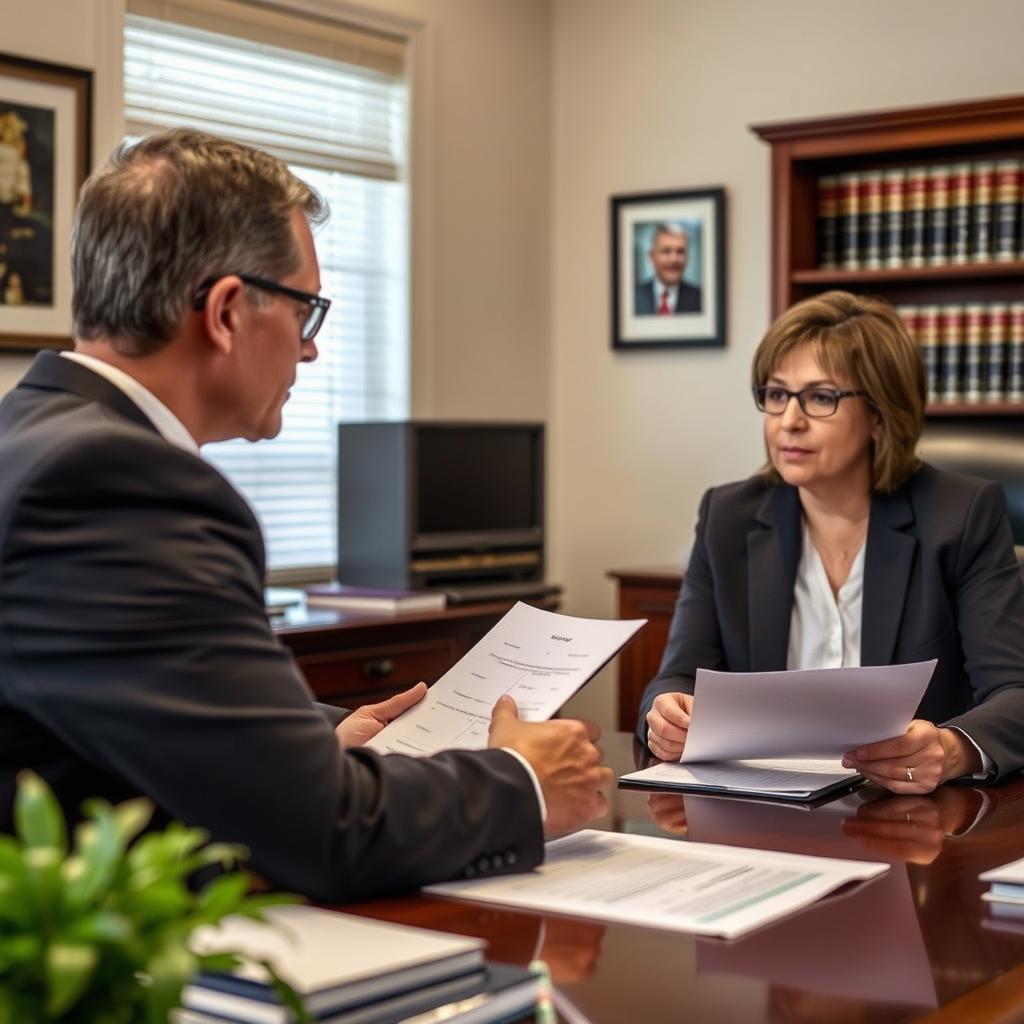
Counsel appearing on family law matters at the local court in Woodstock, VA.
How Mr. Sris and His Of Counsel Handle Armed Forces Divorce Cases
Mr. Sris and his Of Counsel approach each armed forces divorce matter by first identifying all applicable sources of law—Virginia Code, the Servicemembers Civil Relief Act, and the Uniformed Services Former Spouses’ Protection Act—and then mapping out how they interact in the client’s specific circumstances. For service members, a key initial question is whether the SCRA stay is available to temporarily delay court proceedings while the service member is deployed or otherwise unavailable due to military duties. For spouses of service members, the focus often turns to how military retired pay will be classified, valued, and divided, and whether a direct payment from the Defense Finance and Accounting Service can be achieved through a military retired pay division order. The team also examines jurisdictional and residency requirements, ensuring that the Virginia statutory requirements of a six‑month domiciliary residency under Virginia Code § 20‑97 are satisfied before a complaint is filed.
After the initial legal framework is established, Mr. Sris and his Of Counsel guide the client through negotiation or litigation. They prepare and file the required pleadings—specifically, a Complaint for Divorce rather than the obsolete “Complaint”—in the Shenandoah County Circuit Court. When custody or support issues must be addressed on an emergency basis, they file pendente lite motions in the Woodstock Juvenile & Domestic Relations District Court. Throughout the process, they communicate with the client about the realistic timeline, which varies depending on whether the divorce is contested or uncontested and on the complexity of the equitable distribution issues, such as valuing a military pension that includes both marital and separate portions. Mr. Sris’s background as a former prosecutor gives him a thorough command of courtroom procedure and cross‑examination, which becomes especially important in contested custody or fault‑ground divorce trials. While past results do not guarantee a similar outcome, the firm works diligently to achieve a resolution that protects the client’s interests.
About Mr. Sris and His Of Counsel Team
Mr. Sris, Owner and Founder of Law Offices Of SRIS, P.C., has been practicing law since 1997. A former prosecutor, he is admitted to the bars of Virginia, Maryland, the District of Columbia, New Jersey, and New York. Mr. Sris testified before the Virginia House Courts of Justice Committee in support of 2019 HB 635 (chief patron Del. David Bulova), legislation that refined the state’s equitable distribution procedures. His deep familiarity with Virginia divorce and property division law, combined with his prosecution background, positions him to handle the litigation aspects of armed forces divorce cases effectively. Mr. Sris keeps a manageable caseload, allowing him to be directly involved in the strategic decisions of each matter.
Working alongside Mr. Sris is his Of Counsel team. These attorneys are not employees but are engaged through Excella, bringing diverse experience in family law, military divorce, and litigation. Together, Mr. Sris and his Of Counsel bring over 120 years of combined legal experience and 4,739+ documented firm-wide results. Results may vary. Clients in Woodstock and throughout Shenandoah County can reach the firm’s Shenandoah/Woodstock location at (888) 437-7747 for a consultation by appointment.
Frequently Asked Questions
How does military retirement pay get divided in a Virginia divorce?
Military retirement pay is considered marital property and can be divided by a Virginia court under the Uniformed Services Former Spouses’ Protection Act. The Act permits a state court to treat disposable retired pay as property and to award a portion of it to the non‑member spouse. Virginia, as an equitable distribution state, applies the factors in Virginia Code § 20‑107.3 to determine the marital share and the division. The court may direct the Defense Finance and Accounting Service to make direct payments to the former spouse if certain thresholds are met. How the pension is valued—whether using the coverture fraction or another method—depends on the facts of the marriage and the timing of the member’s service. To discuss how these rules apply to your situation, reach Law Offices Of SRIS, P.C. at (888) 437-7747.
Can a service member delay divorce proceedings while deployed?
Yes, a service member can request a stay of divorce proceedings under the Servicemembers Civil Relief Act if military duties materially affect the ability to participate. The court may grant an initial stay of at least 90 days, and a further stay can be requested if circumstances persist. The request must demonstrate that the service member’s duty prevents a meaningful response. While the stay is temporary, it can provide essential time to obtain legal counsel and prepare. The SCRA also provides protections against default judgments. It is important to raise the issue promptly and with proper documentation. For guidance on asserting or responding to a stay request in a Woodstock‑area case, contact Law Offices Of SRIS, P.C. at (888) 437-7747.
What are the residency requirements for filing for divorce in Virginia as a military member?
Virginia requires at least one spouse to have been a resident and domiciliary of the state for six months before filing for divorce, and a service member stationed in Virginia typically meets this requirement. A service member who is permanently stationed at a base in the Commonwealth and intends to remain can satisfy the residency and domicile tests under Virginia Code § 20‑97. Even if the military member lists a home of record in another state, a Virginia court may still exercise jurisdiction if the member’s actual domicile is in Virginia. The same six‑month period applies whether the filing is by the service member or the spouse. If questions about residency arise, the court examines the facts of each case. To determine whether you meet the residency threshold, speak with a family law attorney at Law Offices Of SRIS, P.C.
How does child custody work when one parent is in the armed forces?
Virginia courts decide custody based on the best interests of the child, and a parent’s military service is one factor considered under Virginia Code § 20‑124.3. The ten statutory factors include each parent’s role, the child’s relationship with each parent, and the ability to maintain a relationship. A deployment or permanent change‑of‑station order does not automatically strip a service member of custody; the court may create a parenting plan that addresses periods of absence. Virginia law also allows for temporary custody orders and the designation of a standby guardian. The court will examine how the non‑deploying parent can facilitate the child’s relationship with the deployed parent. India is not a signatory to the 1980 Hague Convention on Civil Aspects of International Child Abduction. For a case‑specific analysis, reach Mr. Sris and his Of Counsel at (888) 437-7747.
Does Virginia require a separation period before filing for an armed forces divorce?
Virginia requires a separation period only for no‑fault divorces; fault‑based grounds such as adultery do not require any period of separation before filing. For a no‑fault divorce under Virginia Code § 20‑91, the couple must have lived separate and apart for one year, or for six months if there are no minor children and the parties have entered into a signed separation agreement. The separation must be continuous and with the intent that the marriage is over. If the divorce is based on a fault ground—adultery, cruelty, desertion, or a felony conviction—no waiting period applies. This distinction can significantly affect the timeline of an armed forces divorce, especially when one spouse is eager to remarry or relocate. To evaluate which ground applies to your circumstances, contact Law Offices Of SRIS, P.C. at (888) 437-7747.
Related practice area pages: Fairfax County Family Law Lawyer | Prince William County Family Law Lawyer | Manassas Family Law Lawyer | Fairfax City Family Law Lawyer
Virginia family law resources: Virginia Code Title 20 (Domestic Relations) | Shenandoah County Circuit Court | Shenandoah County J&DR Court
Attorney advertising. Prior results do not guarantee a similar outcome.
Case results depend on a variety of factors unique to each case.
Results may vary.