
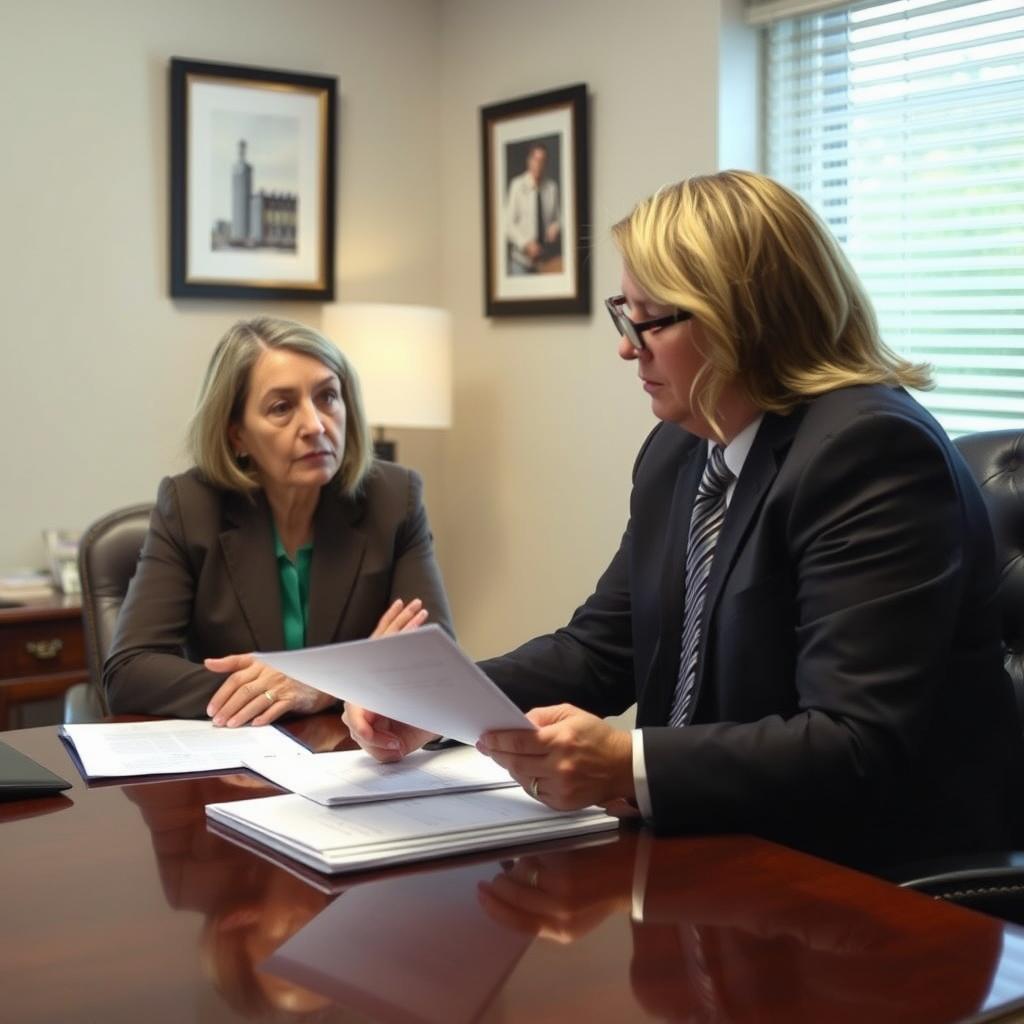
Service Member Divorce Lawyer Woodstock, VA
Service members and their spouses in Woodstock face divorce under a unique intersection of Virginia family law and federal military protections. Law Offices Of SRIS, P.C. Concentrates its practice in family law matters, including service member divorce, throughout Shenandoah County. The firm’s work spans the Woodstock Juvenile & Domestic Relations District Court for custody and support matters and the Woodstock Circuit Court for the divorce itself. Because a military career implicates the Servicemembers Civil Relief Act, the Uniformed Services Former Spouses’ Protection Act, and Virginia’s equitable distribution framework under Va. Code § 20‑107.3, navigating a service member divorce requires forward-looking legal counsel. Mr. Sris and his Of Counsel team serve clients from their Shenandoah Location at 505 N Main St, Suite 103, Woodstock, VA 22664. To request a consultation, call (888) 437‑7747. Law Offices Of SRIS, P.C. – Advocacy Without Borders.
What Service Member Divorce Means in Woodstock, Virginia
A service member divorce in Woodstock is a family law case governed by Virginia Code Title 20, but layered with federal statutes that affect timing, jurisdiction, and the division of military benefits. Because Woodstock lies within the Twenty‑Sixth Judicial District, matters proceed in the Shenandoah County Circuit Court—which has exclusive original jurisdiction over divorce—and in the Juvenile & Domestic Relations District Court for temporary support, custody, and protective orders. Parties often encounter overlapping legal systems: state court rules for property division, federal rules for military retired pay, and the Servicemembers Civil Relief Act, which can pause proceedings while one spouse is on active duty.
Virginia is an equitable distribution state, meaning the court divides marital property fairly—not necessarily equally—after weighing statutory factors such as the duration of the marriage, each spouse’s contributions, and the causes of the dissolution. For Woodstock residents, the process starts with a Complaint filed in the Circuit Court. Service members may be stationed outside Virginia but still meet the residency requirement if one party has been an actual bona fide resident and domiciliary of the Commonwealth for at least six months. The presence of a military installation or frequent PCS moves does not alter the court’s statutory analysis, but it does require careful attention to notice, service of process, and the classification of military-related assets. Mr. Sris and his Of Counsel help clients identify which property is marital, which is separate, and how federal law interacts with Virginia’s domestic relations code.
How Mr. Sris and His Of Counsel Handle Service Member Divorce Cases
Service member divorce cases demand a deliberate, multi‑stage approach. Mr. Sris and his Of Counsel begin by confirming the court with proper jurisdiction—typically the Shenandoah County Circuit Court—and addressing threshold questions such as whether a stay under the Servicemembers Civil Relief Act applies. They then assemble the financial picture, including LES statements, Thrift Savings Plan accounts, military retired pay estimates, and any Survivor Benefit Plan elections.
The team negotiates or litigates every component of the divorce: property division under Va. Code § 20‑107.3, spousal support, child custody, and child support calculated under Virginia’s guidelines. When a case involves a military pension, they work to structure a division that complies with the Uniformed Services Former Spouses’ Protection Act and, if needed, prepare a qualifying court order for the Defense Finance and Accounting Service. Throughout the proceeding, the firm keeps the client informed about the typical timeline, which depends on the court’s calendar, the complexity of the assets, and whether the matter is contested or uncontested. In every instance, the objective is a thorough resolution that respects both Virginia law and the service member’s obligations.
About Mr. Sris and His Of Counsel Team
Mr. Sris, Owner and Founder of Law Offices Of SRIS, P.C., is a former prosecutor who has practiced family law across Virginia, Maryland, the District of Columbia, New Jersey, and New York since 1997. Mr. Sris testified before the Virginia House Courts of Justice Committee in support of 2019 HB 635 (chief patron Del. David Bulova), which revised the equitable distribution statute that governs how property and retirement assets are apportioned in a Virginia divorce. That firsthand experience with the legislative process informs the firm’s approach to service member divorces, particularly the division of military pensions and deferred compensation.
Mr. Sris and his Of Counsel bring over 120 years of combined legal experience, with 4,739+ documented firm-wide results. Results may vary. The Of Counsel attorneys, engaged through Excella, contribute deep backgrounds in litigation, negotiation, and multi‑state practice. The team has documented thousands of case results since the firm’s founding. Every client matter receives a detailed review of the applicable statutes and the specific financial and custodial issues that military service creates.
Frequently Asked Questions
What is a service member divorce in Virginia?
A service member divorce is a divorce in which at least one spouse is an active-duty, reserve, or retired member of the United States armed forces, and Virginia law applies. These cases proceed under Virginia Code Title 20, just like other divorces, but they also involve federal protections such as the Servicemembers Civil Relief Act and the division of military retired pay under the Uniformed Services Former Spouses’ Protection Act. The Circuit Court handles the divorce decree and equitable distribution, while the Juvenile and Domestic Relations District Court addresses custody and support. Because military benefits and a demanding deployment schedule present special challenges, experienced legal guidance helps ensure the outcome accounts for both state and federal rules.
How does military service affect the divorce process in Woodstock?
Military service can pause or alter the divorce process in Woodstock through the Servicemembers Civil Relief Act, which allows active-duty members to request a stay of proceedings for a defined period. This is meant to prevent a member from being forced to litigate while unable to participate due to military duties. Additionally, jurisdiction questions may arise if the service member is stationed outside Virginia but still claims residency in the Commonwealth. The Shenandoah County Circuit Court will evaluate the domicile requirement and the service member’s intent, while any stay request is handled on the court’s motion calendar. Mr. Sris and his Of Counsel routinely address these procedural steps to keep the matter moving as efficiently as possible.
Can my military pension be divided in a Virginia divorce?
Yes, a military pension may be divided as marital property in a Virginia divorce, consistent with the Uniformed Services Former Spouses’ Protection Act and Virginia’s equitable distribution statute. The court determines the marital share of the retired pay and can award a portion to the non‑member spouse. A qualifying court order—often called a division order—is then prepared and submitted to the Defense Finance and Accounting Service for direct payment, provided the marriage lasted at least ten years overlapping the member’s creditable military service. Even if the ten‑year threshold is not met, the court can still award a share through other means. The team works with financial and pension valuation professionals to present a complete picture of the asset.
Do I need a lawyer for a service member divorce in Woodstock?
You are not legally required to hire a lawyer for a service member divorce, but the overlapping state and federal statutes make self‑representation especially challenging. The case involves issues that rarely arise in a civilian divorce: SCRA stays, military leave and earnings statements, the Survivor Benefit Plan, and the jurisdictional interplay between Virginia circuit courts and the service member’s home state of record. An error in classifying a military asset or failing to comply with a procedural requirement can have a lasting financial impact. Seeking a consultation allows you to understand how the law applies to your situation and to make an informed decision about how to proceed.
How long does a service member divorce take in Woodstock?
The timeline for a service member divorce in Woodstock varies with the complexity of the case, whether it is contested, and whether an SCRA stay has been requested. An uncontested divorce where both spouses agree on all terms and no minor children are involved may be processed more quickly, while a contested matter involving military pension division, spousal support, and custody can extend the proceeding. The Shenandoah County Circuit Court sets hearing dates based on its own docket, and additional time is required if the service member is deployed or stationed overseas. Mr. Sris and his Of Counsel guide clients through the expected progression and keep them advised at each stage.
Fairfax County Family Law • Prince William County Family Law • Manassas Family Law • Falls Church Family Law
Official sources: Virginia Code Title 20 (Domestic Relations) • Shenandoah County Circuit Court • Servicemembers Civil Relief Act (U.S. Dept. Of Justice).
Attorney advertising. Prior results do not guarantee a similar outcome. Results may vary.
Case results depend on a variety of factors unique to each case.