
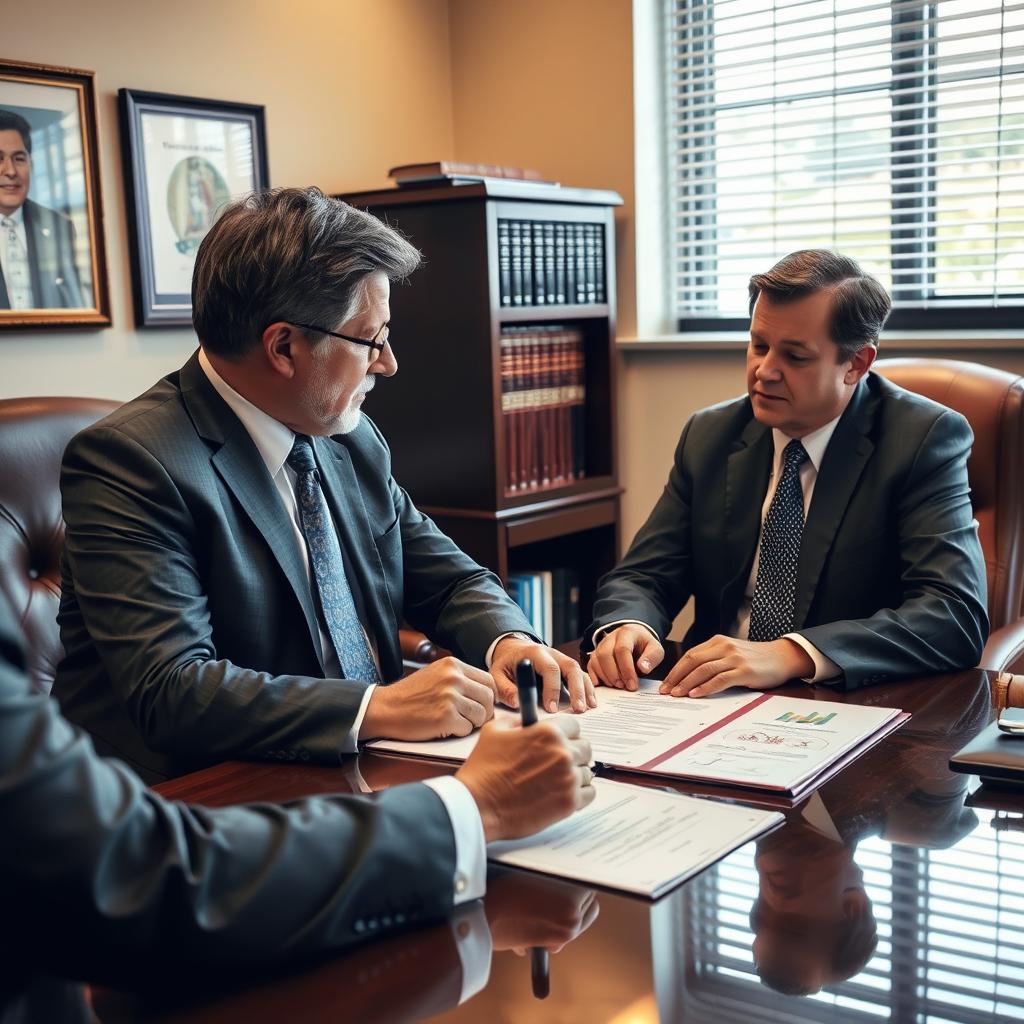
Manufacturing of Controlled Substances lawyer Rockingham County, VA
You are at your residence in Rockingham County when federal agents—perhaps from the DEA or FBI—execute a search warrant. They seize chemicals, equipment, and substances they allege were part of a manufacturing operation. Before you fully understand the situation, you face federal charges under 21 U.S.C. § 841 for manufacturing controlled substances. A conviction can bring decades in prison with no possibility of parole. The U.S. Attorney’s Office for the Western District of Virginia will pursue the case actively, and the stakes are higher than in state court. If this is where you find yourself, you need a defense team that knows the federal system and the local courts. Mr. Sris and his Of Counsel team at Law Offices Of SRIS, P.C. defend individuals throughout Rockingham County who are facing federal drug manufacturing allegations. To discuss your situation, reach our office at (888) 437-7747. Law Offices Of SRIS, P.C. – Advocacy Without Borders.
Understanding Federal Manufacturing Charges in Rockingham County
Federal manufacturing of controlled substances is prosecuted under the Controlled Substances Act, which makes it a felony to manufacture, distribute, or possess with intent to manufacture any controlled substance (21 U.S.C. § 841). Unlike most state drug charges, federal manufacturing cases are handled in the U.S. District Court for the Western District of Virginia. For Rockingham County residents, the relevant courthouse is the Harrisonburg Division, located at 116 N Main Street in downtown Harrisonburg. The U.S. Attorney’s Office prosecutes these cases, and federal agents—often from the DEA, FBI, or the Harrisonburg-Rockingham County Drug Task Force—serve as investigators. Because federal drug laws impose severe mandatory minimum prison terms based on the type and quantity of the substance involved, the consequences of a conviction are life-altering.
Rockingham County sits along the I‑81 corridor, a route that federal authorities monitor closely for drug trafficking. Manufacturing can encompass activities ranging from operating a clandestine methamphetamine laboratory to cultivating marijuana in a barn outside Harrisonburg. Regardless of scale, federal law treats manufacturing as a serious offense. The charge does not require that a finished drug be produced; possessing precursor chemicals with the intent to manufacture is enough. Mr. Sris and his Of Counsel are familiar with how these investigations unfold in the Shenandoah Valley and the strategies prosecutors use in the Western District.
How Mr. Sris and His Of Counsel Approach Federal Drug Manufacturing Cases
The team at Law Offices Of SRIS, P.C. begins by scrutinizing every aspect of the government’s case. In a manufacturing case, the legality of the initial search is often the first line of defense. If federal agents entered a home, vehicle, or outbuilding without a valid warrant or exceeded the scope of a warrant, any evidence seized may be suppressed. They also examine the chain of custody of alleged controlled substances and test the reliability of laboratory analysis. Because the federal system places heavy weight on quantity, they challenge the government’s calculations and, where appropriate, present evidence that reduces the amount of drugs attributed to the defendant.
Mr. Sris leverages his extensive experience in federal courts to negotiate with prosecutors and explore opportunities under the U.S. Sentencing Guidelines. The goal is to position the client for the most favorable resolution—whether that is a reduced charge, a plea agreement that avoids a mandatory minimum, or a trial when the facts justify it. Throughout the process, the team stays in close communication with the client, explaining each step clearly and taking direction from the client’s objectives.
What to Expect in Federal Court
A federal manufacturing case typically begins with an arrest or a summons following an indictment by a federal grand jury. The defendant appears before a magistrate judge for an initial appearance, where the charges are read and bail is addressed. In drug manufacturing cases, the prosecution often seeks detention on the ground that the defendant is a danger to the community, so a detention hearing follows quickly. The Speedy Trial Act imposes strict timelines, which means events move faster than in many state courts.
After the indictment is handed down, the defendant is arraigned and enters a plea of not guilty. Pretrial motions—such as motions to suppress evidence—are filed and argued before the district judge. Discovery in federal criminal cases is governed by the Federal Rules of Criminal Procedure and the government’s obligations under Brady v. Maryland. The case may resolve through a plea agreement, or it may proceed to trial before a jury. If convicted, sentencing is conducted by the district judge using the U.S. Sentencing Guidelines as advisory, as permitted by United States v. Booker. The court considers the nature of the offense and the defendant’s background, and the judge imposes a sentence within the statutory range.
Penalties and Consequences of a Federal Manufacturing Conviction
The penalties for manufacturing controlled substances in the federal system are among the harshest in the criminal law. A conviction can result in a prison term measured in years or decades, and because Congress abolished parole for federal crimes in 1987, a defendant will serve substantially all of the sentence imposed. In addition to incarceration, the court may order substantial fines, forfeiture of property used in the offense, and a term of supervised release after the prison sentence is completed. A felony conviction also brings collateral consequences: loss of voting rights, ineligibility for many jobs and professional licenses, and ineligibility for federal student loans or housing benefits. Results may vary. It is essential to work with a defense team that understands the full impact of a conviction and can explore every avenue to minimize its consequences.
About Mr. Sris and His Of Counsel Team
Mr. Sris, Owner and Founder of Law Offices Of SRIS, P.C., established the firm in 1997. He is a former prosecutor with experience in criminal trial work, and he is admitted to practice in Virginia, Maryland, the District of Columbia, New Jersey, and New York. Mr. Sris testified before the Virginia House Courts of Justice Committee in support of 2019 HB 635 (chief patron Del. David Bulova).
Mr. Sris and his Of Counsel bring over 120 years of combined legal experience and have achieved 4,739+ documented firm-wide results. Results may vary. The team includes attorneys with backgrounds in federal litigation and a thorough knowledge of the procedures in the Western District of Virginia. They collaborate on each case, ensuring that every client benefits from the firm’s collective knowledge and strategic judgment.
Frequently Asked Questions
How long does a federal drug manufacturing case take?
The timeline of a federal drug manufacturing case varies depending on the complexity of the evidence, the number of defendants, and the court’s calendar. The Speedy Trial Act requires that a trial begin within seventy days of the initial appearance, but many delays are excluded by statute, such as time for pretrial motions or the resolution of discovery disputes. Some cases resolve in a matter of months through a plea; others stretch over a year or more when motions are contested and an indictment involves multiple counts or co-defendants.
How much does a federal criminal lawyer cost?
The cost of a federal criminal defense attorney depends on the nature of the charges, the expected length of representation, and the complexity of the case. Fees are typically arranged on a flat-fee or hourly basis, and the structure is discussed during the initial consultation. Law Offices Of SRIS, P.C. offers consultations by appointment so that you can understand the potential cost before making a decision. Call (888) 437-7747 to schedule.
What defenses are available against federal manufacturing charges?
Defenses in federal manufacturing cases often focus on challenging the legality of the search that uncovered the evidence, contesting the government’s proof of intent to manufacture, or attacking the reliability of laboratory analysis. An experienced defense attorney will examine whether the warrant was properly issued and executed, whether any statements made by the defendant are admissible, and whether the quantity of controlled substance attributed to the defendant is accurate. In some instances, the defense may present evidence that the operation was not for manufacturing but for personal use, or that the defendant lacked the requisite knowledge.
Can federal manufacturing charges be dropped?
Federal manufacturing charges can be dismissed if a motion to suppress evidence is successful and the government is left without a viable case, or if the prosecution decides the evidence is insufficient after reviewing defense challenges. Dismissal is not common in well‑prepared indictments, but it happens when a search is found unconstitutional or a key witness becomes unavailable. Even if the charge is not dropped, an effective defense can lead to a reduced charge or a more favorable plea agreement.
What is the statute of limitations for federal drug manufacturing?
Under 18 U.S.C. § 3282, the statute of limitations for most non‑capital federal felonies, including drug manufacturing under 21 U.S.C. § 841, is five years from the date the offense was completed. However, for conspiracy offenses, the limitations period may extend beyond the completion of the manufacturing act because each act in furtherance of the conspiracy can restart the clock. If you have any reason to believe you are under investigation, speak with an attorney immediately to protect your rights.
Do I need a lawyer for a federal manufacturing charge in Rockingham County?
Yes, you need an experienced federal criminal defense lawyer if you face a manufacturing charge in the Western District of Virginia. Federal court procedures are different from state court, the penalties are more severe, and the U.S. Attorney’s Office has substantial resources. An attorney who regularly practices in the Harrisonburg Division will know the local procedures, the judges, and the typical approach of the prosecutors handling these cases. Mr. Sris and his Of Counsel represent clients throughout Rockingham County and can be reached at (888) 437-7747.
Nearby counties we serve: Clarke County Federal Criminal Lawyer · Shenandoah County Federal Criminal Lawyer · Frederick County Federal Criminal Lawyer · Warren County Federal Criminal Lawyer · Augusta County Federal Criminal Lawyer
For more information about the court system, visit the Virginia Judicial System website. Virginia statutory law is accessible through the Virginia Law Portal.
Attorney advertising. Prior results do not guarantee a similar outcome.
Results may vary.
Case results depend on a variety of factors unique to each case.